Your Fortnightly Budget Planner in Australia
By Fay & Form Studio · 7 October 2026
Navigating your personal finances can feel like a maze, especially when your income arrives every two weeks. In Australia, many of us get paid fortnightly, which means managing bills that are often due monthly or quarterly requires a smart approach. A fortnightly budget planner works when every bill is converted to a per-pay amount first. This guide from Fay & Form will help you create a practical fortnightly budget planner, helping you align your spending with your pay cycle and use every dollar wisely. We’ll cover how to handle those tricky monthly and quarterly bills, use your two 'extra' pays each year, and even manage a joint budget if you're a couple on different pay cycles. It is about making your money work for you, simply and practically.
Setting Up Your Fortnightly Budget Planner
Most Australians paid fortnightly receive 26 pays each year. This is different from a monthly pay cycle, which only gives you 12 pays. The key to making your fortnightly budget planner effective is to break down all your expenses into fortnightly amounts. This way, you always know exactly how much you need to set aside from each pay.
To convert a monthly bill to a fortnightly amount, you multiply the monthly cost by 12 (for the number of months in a year) and then divide by 26 (for the number of pays in a year). For example, a $100 monthly phone bill would be $100 x 12 = $1200 per year. Then, $1200 / 26 = $46.15 per fortnight. This $46.15 is the amount you need to put aside from each pay to cover that monthly bill.
It is helpful to list all your regular income and expenses first. Include everything from your rent or mortgage to your streaming services and daily coffee. Do not forget those less frequent bills, like car registration or annual insurance – we will talk more about those soon. Once you have a clear picture, you can start assigning a fortnightly amount to each.
Here’s a quick look at how some common monthly bills convert:
| Monthly Expense | Monthly Cost (A$) | Annual Cost (A$) | Fortnightly Cost (A$) |
|---|---|---|---|
| Rent/Mortgage (example) | 2,000 | 24,000 | 923.08 |
| Phone Bill | 100 | 1,200 | 46.15 |
| Internet | 80 | 960 | 36.92 |
| Electricity (average) | 150 | 1,800 | 69.23 |
| Car Loan | 400 | 4,800 | 184.62 |
Understanding Your Pay Cycle Budget
A well-structured pay cycle budget helps you allocate your funds as soon as they hit your account. This approach helps you avoid running short before your next pay day. Start by categorising your expenses into 'fixed' and 'variable' costs. Fixed costs are generally the same amount each fortnight or month, like rent, loan repayments, or subscriptions. Variable costs change, such as groceries, transport, and entertainment.
For your fixed costs, use the fortnightly amounts you calculated earlier. For variable costs, look at your past spending to estimate a realistic fortnightly average. It is better to overestimate slightly than to underestimate and find yourself short. Once you know your income and all your outgoings, you can see how much is 'left to spend' each fortnight. This is your discretionary income, and knowing this number is powerful.
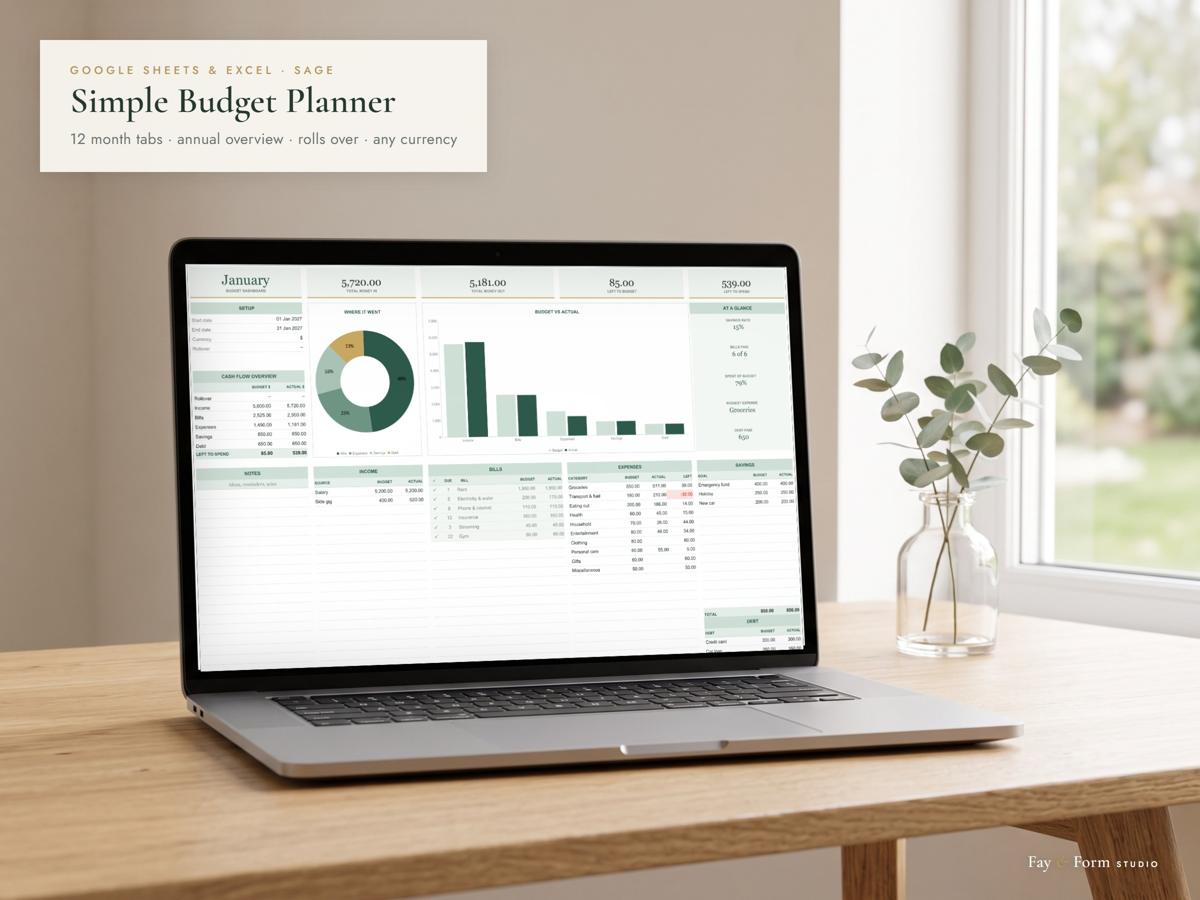
Tools like the Simple Budget Planner Google Sheets & Excel can make tracking your pay cycle budget straightforward. It lets you see your expected budget versus what actually happens each month on one calm screen, without needing to log every single transaction.
The Two Extra Pays: Your Fortnightly Budget Template Bonus
One of the biggest advantages of a fortnightly pay cycle is that two months each year will have three pay days instead of two. This happens because 26 pays divided by 12 months is not an even number. These 'extra' pays are a helpful bonus for your finances. But with a solid fortnightly budget template, you can plan for these pays and use them strategically.
Instead of letting these extra pays disappear into everyday spending, consider dedicating them to specific financial goals. This could mean making extra payments on debt, boosting your savings, or contributing significantly to your sinking funds for larger expenses. For instance, if you are saving for a home deposit, a holiday, or a new car, these two extra pays can provide a good boost towards your goal.
Using a comprehensive printable or digital planner can help you plan for these extra pays. A good fortnightly budget template will include sections for tracking your savings goals and debt payoff, making it easy to see the impact of these bonus pays. This planned approach turns a potential 'windfall' into a useful financial tool, helping you reach your goals faster.
Creating a Budget Planner for Couples
Budgeting as a couple brings its own set of considerations, especially if you are both paid fortnightly but on different cycles, or even if one of you is paid monthly. The key to a successful budget planner for couples is open communication and a clear system. It is not about merging every dollar, but about understanding where the shared money goes and how individual spending fits in.
One common approach for a budget planner for couples is to set up a joint account for all shared household expenses. Both partners contribute a set fortnightly amount to this account, covering rent/mortgage, utilities, groceries, and other joint bills. The remaining income goes into individual accounts for personal spending, savings, or debt repayment. This gives both partners financial independence while ensuring shared responsibilities are met.
If your pay cycles are different, you might need to adjust when contributions are made to the joint account. For example, if one partner gets paid on a Monday and the other on a Friday, you could agree that contributions are made from the first pay received after the 1st and 15th of each month, or simply align with the partner whose pay covers most fixed bills. Regularly scheduled 'money dates' to review your budget, spending, and goals are important. This helps both of you stay on the same page and adjust your budget as life changes. Fay & Form also offers a household planner app, which, while not a financial planner, can help couples manage shared tasks and planning, fostering a collaborative environment for all household matters.
Managing Monthly and Quarterly Bills
Even with a fortnightly pay, many of our significant bills are still due monthly, quarterly, or even annually. Trying to pay these large, irregular sums straight from a single fortnightly pay can throw your budget into disarray. The solution is to use 'sinking funds'.
A sinking fund is like a dedicated savings pot for a specific future expense. For example, if your car registration is $800 annually, you divide $800 by 26 pays: $800 / 26 = $30.77. This means you need to put $30.77 aside from each fortnightly pay into a separate savings account or a dedicated category within your budget. When the rego bill arrives, the money is already there, waiting. This avoids a big financial shock.
This strategy works for all irregular bills: quarterly electricity bills, annual insurance premiums, school fees, or even Christmas presents. List all your non-fortnightly expenses, calculate their annual cost, divide by 26, and make that fortnightly contribution a non-negotiable part of your budget. This smooths out your cash flow, making your finances much more predictable.
For more comprehensive guidance on managing your money, you might find our article on Budget planner australia helpful. It covers broader budgeting principles that complement your fortnightly planning.
Fay & Form Tools to Support Your Budgeting
At Fay & Form, we design tools to help you manage your money calmly and effectively. Our range of budget planners is built with practicality in mind, suitable for anyone using a fortnightly budget planner.
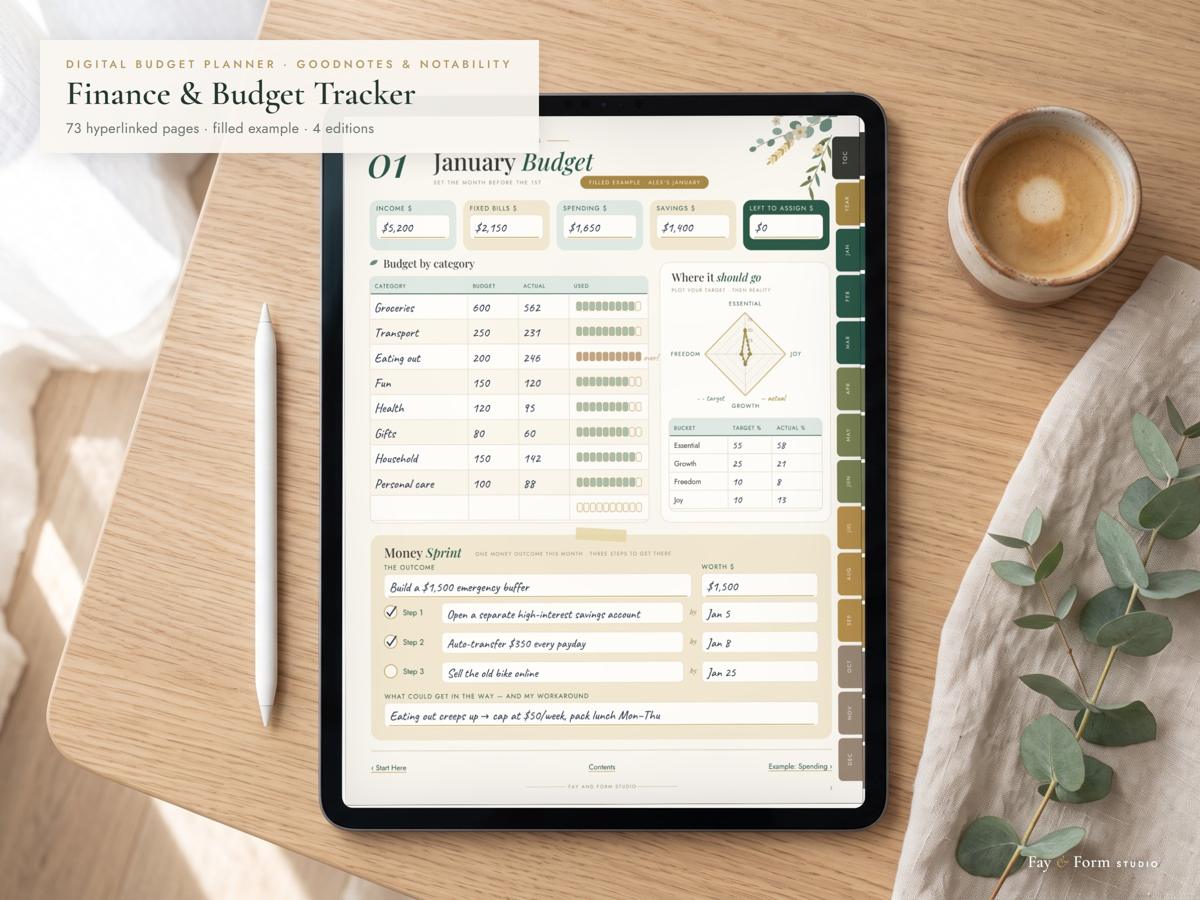
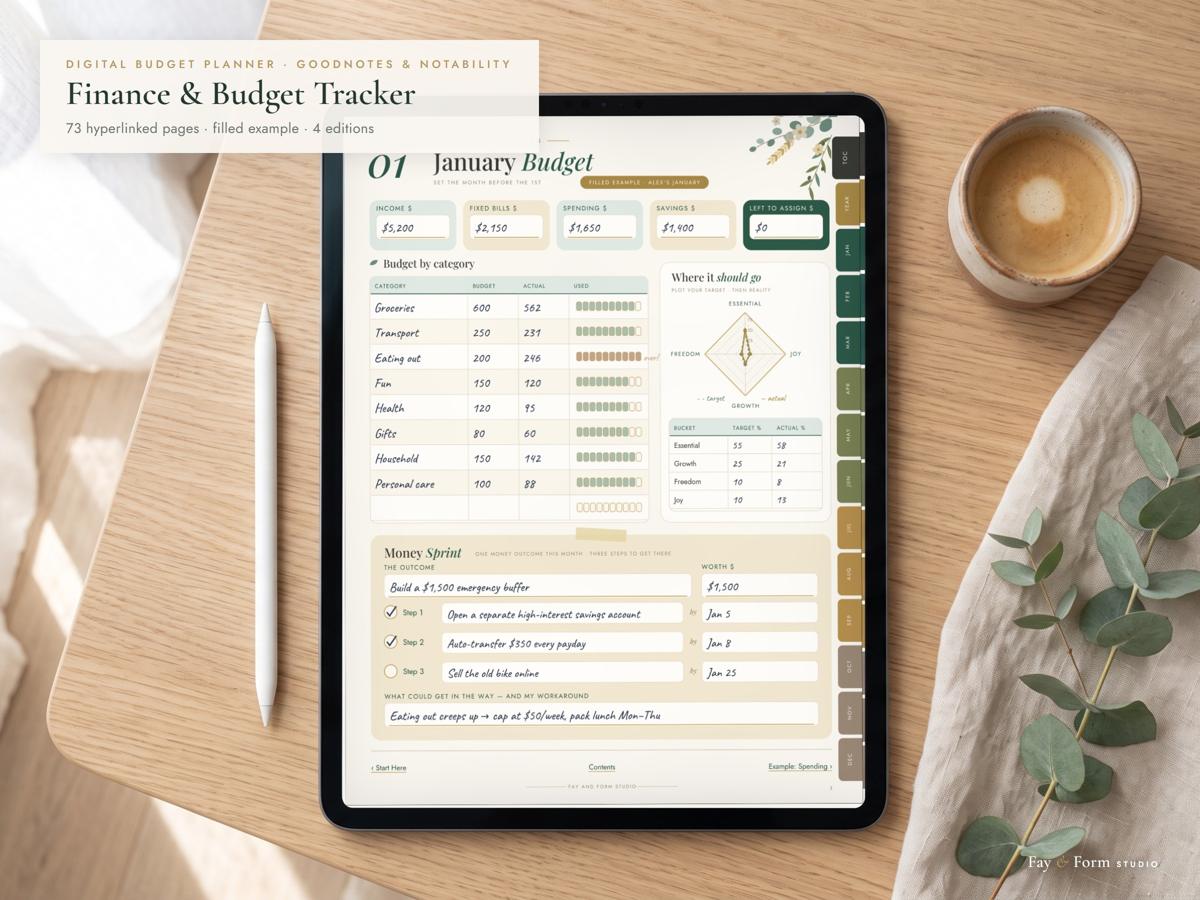
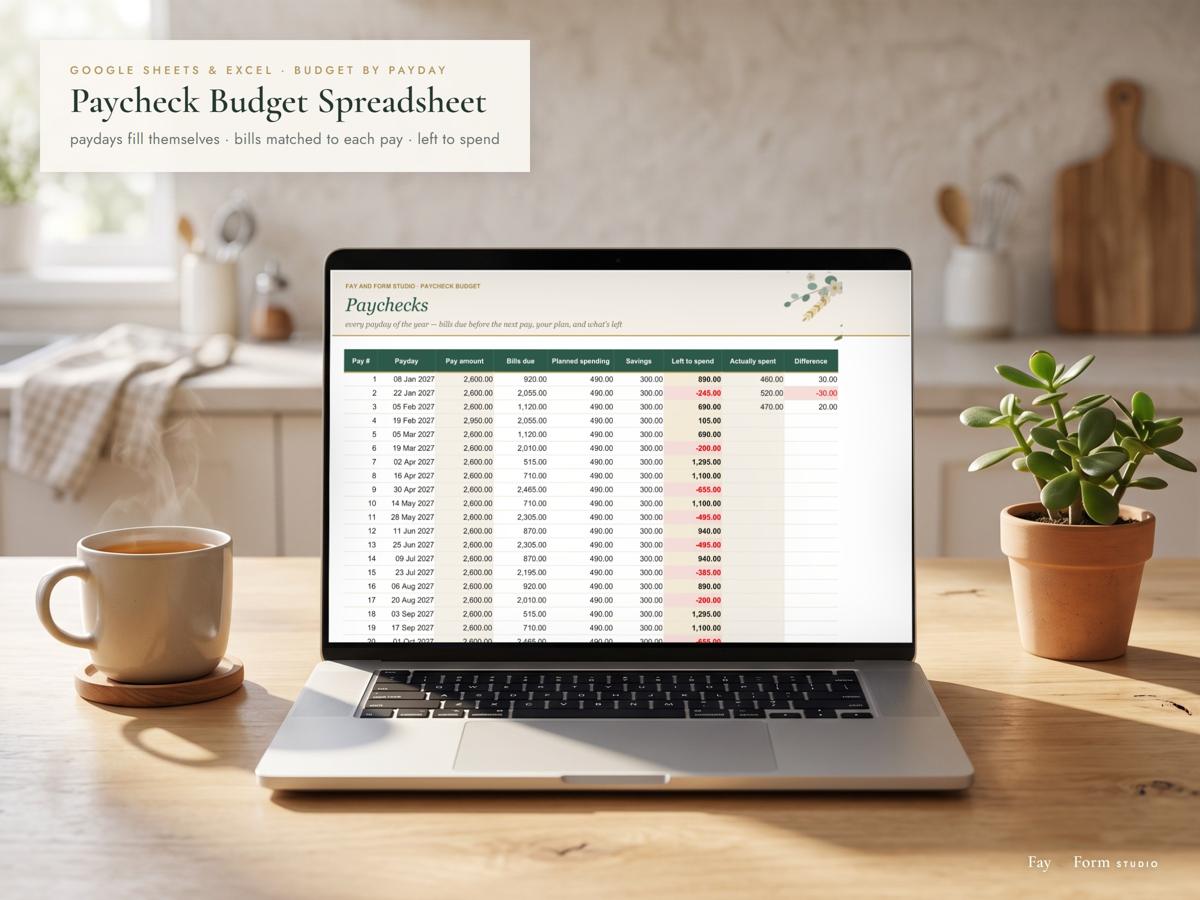
Our Budget Planner Digital (A$14.90) is a calm, well-designed digital budget planner. It comes with a filled example, showing you exactly how to use it. Each month features three linked pages: Budget, Spending, and Review. You plan where your money should go, log what you spend, then take two minutes to see what worked. It is 73 pages with over 1,300 links, including a money setup, year at a glance, paycheck budget, and bill calendar. It also has quarter reviews, a year in money summary, debt payoff, sinking funds, a 100-step savings challenge, net worth tracking, a no-spend tracker, subscriptions audit, and a big-purchase planner. It is available in US Letter, A4, and a separate phone layout, and works in your preferred PDF annotation app.
If you prefer pen and paper, our Printable Budget Planner (A$9.90) is the paper edition of our digital planner. It is designed to print beautifully at home with white pages, light tints, and thin outlines, saving ink. Every page is undated, so you can print templates as needed. It includes a 16-page filled example to guide you through each section.
For those who prefer spreadsheets, our Simple Budget Planner Google Sheets & Excel (A$9.90) lets you see every month of your money on one calm screen. You type what you expect, type what actually happens, and watch the totals, charts, and 'left to spend' update instantly. It is available for Google Sheets, Excel, and Apple Numbers, and works in any currency.
All Fay & Form planners are digital downloads, priced in Australian dollars, so nothing is posted to you. We also offer a household planner app. The free plan lets one person use one planner, no card needed. Sharing with family starts with Tier 1 at A$29 a year. Currently, our ready-made app planners include the Ramadan kids planner, a home garden planner, and a dog care planner, each with a free demo.
Frequently Asked Questions
How do I budget monthly bills on a fortnightly pay?
To budget monthly bills on a fortnightly pay, convert each monthly bill to a fortnightly equivalent. Multiply the monthly cost by 12 (months in a year) and then divide by 26 (fortnights in a year). For example, a $200 monthly bill becomes $200 x 12 / 26 = $92.31 per fortnight. Set this amount aside from each pay into a 'sinking fund' or dedicated savings to cover the bill when it is due.
What are the two extra pays in a year?
A fortnightly pay cycle provides 26 pays over a year. Since there are 12 months in a year, this means two months will have three pay days instead of the usual two. These two 'extra' pays offer a great opportunity to accelerate financial goals like paying down debt, boosting savings, or building up sinking funds for larger expenses.
How do couples budget with different pay cycles?
Couples with different pay cycles can budget effectively by establishing a joint account for shared expenses. Both partners agree on a regular contribution amount from each of their pays, ensuring all shared bills are covered. Individual accounts can then manage personal spending. Regular communication and 'money dates' are essential to review and adjust the budget together.
Conclusion
Taking control of your money with a fortnightly budget planner does not have to be complicated. By understanding your pay cycle, converting bills to fortnightly amounts, strategically using your extra pays, and communicating openly if you are budgeting as a couple, you can build a strong financial foundation. The key is consistency and having a clear plan.
Ready to take the next step and bring clarity to your finances? See the Budget Planner Digital.