Journal · Planning and productivity
Building New Routines: Your Guide to an Effective Habit Tracker
By Fay & Form Studio · 7 October 2026
Building new routines can feel like a big effort, especially when life gets busy. That's where a habit tracker comes in handy. It's a simple tool that helps you stay consistent with your goals, but only if you use it the right way. A habit tracker works best with three habits, not thirty. At Fay & Form Studio, we’ve designed planners to help real Australians build lasting routines, not just start them.
Using Your Planner Without It Becoming a Chore
The goal of this tool is to make building new routines easier, not harder. If it feels like a burden, you'll stop using it. Here’s how to keep your planner light and effective.
Choose Two or Three Habits
- Trying to change too many things at once is a common pitfall. Focus your energy. Pick just two or three new habits you want to establish.
- Think about what will give you the most impact or joy. Maybe it's drinking more water, going for a short walk, or reading a few pages of a book.
Make Your Habits Small
- Don't aim for an hour-long gym session every day if you're just starting. Break it down.
- Instead of "exercise daily," try "do 10 squats" or "walk for 10 minutes."
- The idea is to make the habit so small you can't say no. Once you start, you might do more, but the goal is just to tick that small box.
Use Monthly Grids
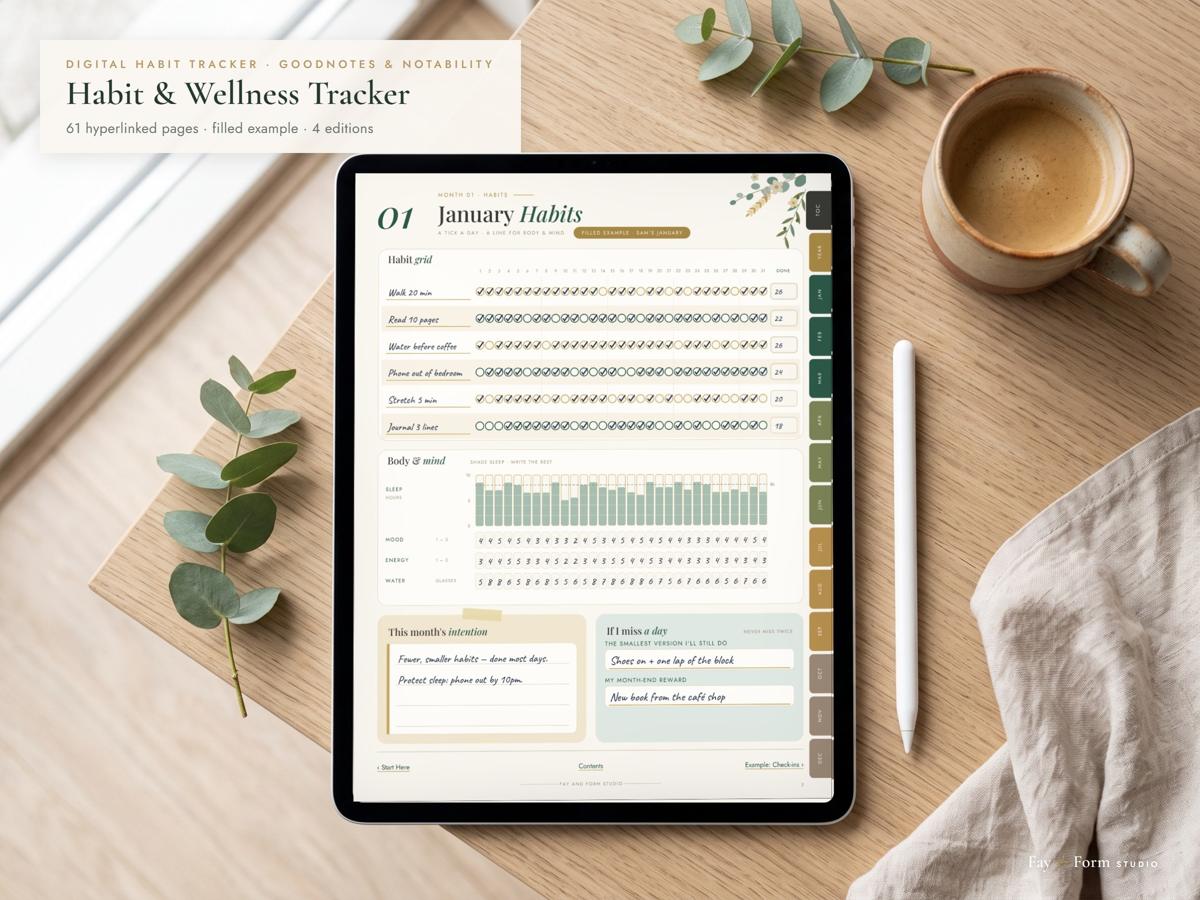
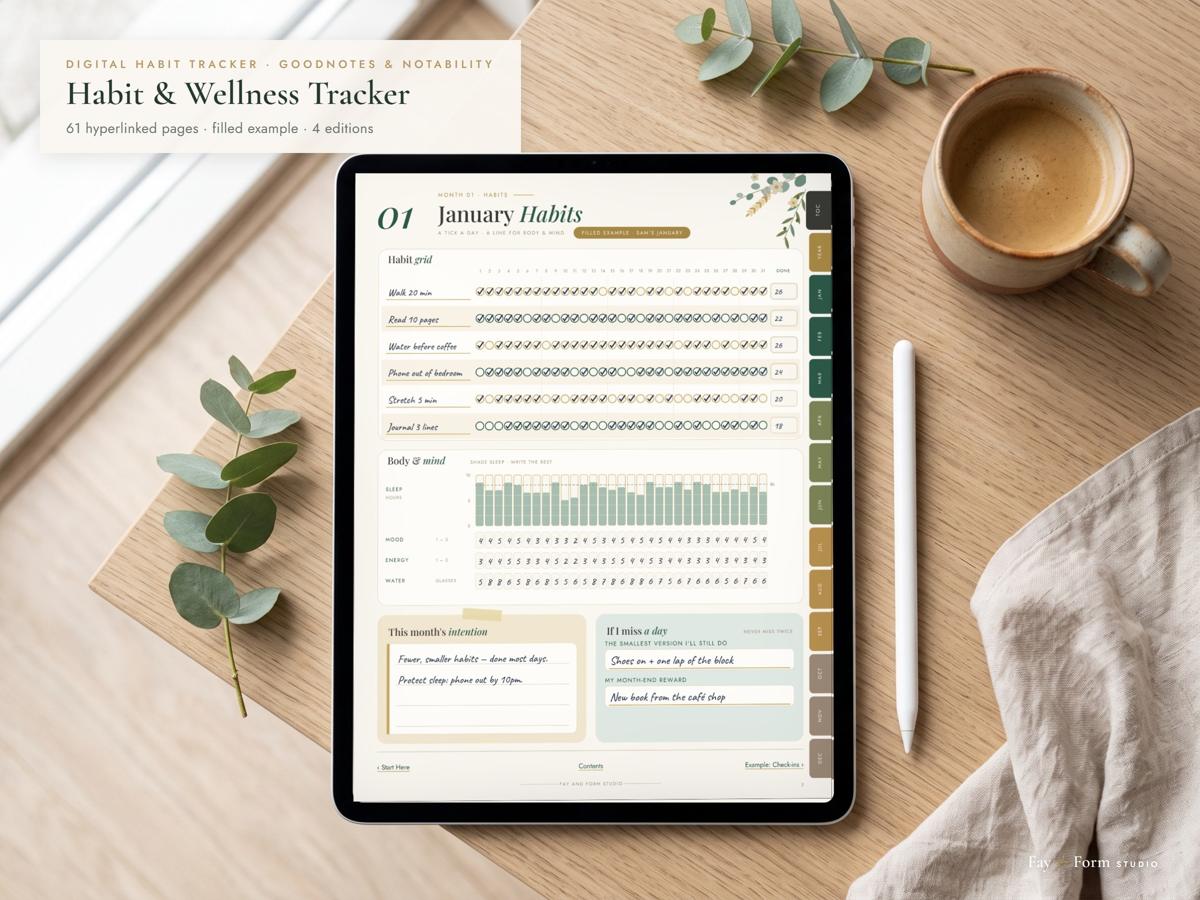
- Monthly grids give you a clear overview of your progress without overwhelming you. You can see a whole month at a glance.
- Each day, mark off your habit. A simple tick, cross, or colour-in works well.
- This visual progress can be very motivating.
Streaks Versus Totals
- Many people get caught up in perfect streaks. They miss one day and give up entirely. This isn't helpful.
- Focus on consistency over perfection. It’s okay to miss a day. The important thing is to get back on track the next day.
- Think of it as a total number of successful days in a month, rather than an unbroken chain.
- Our digital planner is built around this idea: it encourages getting back on track after a missed day, not perfect streaks.
Habit Tracker Ideas for a Better You
Wondering what habits to track? Here are some simple, practical habit tracker ideas that resonate with everyday life in Australia. Remember to start small.
- Wellness & Health:
- Drink 2 litres of water.
- Walk for 15 minutes.
- Eat one piece of fruit.
- Get 7 hours of sleep.
- Take daily vitamins.
- Meditate for 5 minutes.
- Mind & Learning:
- Read 10 pages of a book.
- Learn 5 new words.
- Journal for 5 minutes.
- Listen to a podcast.
- Home & Organisation:
- Make your bed.
- Wipe down kitchen benches.
- Do one load of laundry.
- Tidy one surface.
- Personal Growth:
- Practice gratitude.
- Call a family member.
- Work on a hobby for 15 minutes.
These ideas are a starting point. Choose what truly matters to you right now.
The Benefits of a Habit Tracker Printable
Sometimes, the simple act of putting pen to paper makes all the difference. A habit tracker printable offers a tactile experience that digital tools can't quite replicate.
- No Distractions: A physical page means no notifications or other apps to pull your focus away.
- Accessibility: Print it out and stick it anywhere you'll see it – on the fridge, in your planner, or by your desk.
- Customisation: You can print as many copies as you need. If you mess up a page, just print a new one.
- Low Ink Design: Our printable templates are designed to print beautifully at home. It uses white pages, light tints, and thin outlines, so it prints well in colour or black and white and uses far less ink than a full-colour planner. It comes with 59 pages, including 47 undated templates, allowing you to reprint whenever you need more.
For those who prefer a tangible record, a printable is an excellent choice.
Exploring a Habit Tracker App
For many, the convenience of a digital tool is unmatched. A habit tracker app brings your progress right to your fingertips, wherever you go.
- Always With You: Your phone or tablet is usually nearby, making it easy to check off habits on the go.
- Reminders: Many apps offer customisable reminders, which can be a real help when you're building a new routine.
- Data and Analytics: Some apps provide graphs and statistics, showing your progress over time in different ways.
Fay & Form Studio offers a detailed digital planner, designed as a standard, hyperlinked PDF with bookmarks. It works easily in popular apps like GoodNotes, Notability, Noteshelf, Xodo, Flexcil, and PDF Expert on iPad and Android tablets. This 61-page digital download (A$12.90) includes over 1,000 links for easy navigation. It features 12 months of habit grids with sleep, mood, energy, and water tracking, weekly check-ins, and a kind monthly review with 'keep, tweak, or drop' options for each habit. You also get a filled example showing realistic missed days, habit design prompts (cue, two-minute version, why), and a 'never miss twice' reset log.
We also run a household planner app. The free plan opens one planner in the app for one person, with no card needed. If you want to share with the family, Tier 1 starts at A$29 a year. Ready-made app planners today include the Ramadan kids planner, a home garden planner, and a dog care planner, each with a free demo filled with sample entries. A dedicated app experience can provide structure and support.
Designing Habits for Real-World Success
It's not just about tracking; it's about designing habits that stick. Think about the 'why' behind each habit and how you can make it easier to start.
- The 'Why': Why do you want to build this habit? Connecting to your deeper values makes it more meaningful. For example, "I want to walk for 15 minutes to feel more energetic and improve my long-term health."
- The 'Cue': What will trigger your habit? A specific time, another activity, or a place? "After I finish my first cup of tea, I will walk."
- The 'Two-Minute Rule': If a habit feels too big, scale it down to two minutes. The goal is just to start. "Read for two minutes" instead of "Read a chapter."
- The 'Bad Day' Version': Life happens. For every habit, have a 'bad day' version. If you can't walk for 15 minutes, can you walk for 2 minutes? Or stretch for 30 seconds? This prevents you from giving up entirely. Our 2027 Planner Australia also incorporates elements of flexible planning to accommodate real life.
By thinking through these steps, you set yourself up for better consistency with your tracking.
Frequently Asked Questions
How many habits should I track at once?
It's generally best to start with just two or three new habits. Trying to track too many at once can feel overwhelming and lead to giving up altogether. Focus your energy on a few key areas, build momentum, and then you can gradually add more.
Is tracking better on paper or in an app?
Both paper and app-based tracking tools have their advantages. A paper tracker offers a distraction-free, tactile experience and can be displayed easily. A digital tracking app provides convenience, portability, and often reminders and analytics. The best choice depends on your personal preference and how you best stay motivated. Many people enjoy the flexibility of our digital planners, which work in popular notetaking apps.
What are good habits to track?
Good habits to track are those that align with your personal goals and values. Start with small, achievable actions that can make a big impact on your well-being. Examples include drinking more water, taking a short walk, reading a few pages of a book, making your bed, or practising gratitude. The key is to choose habits you genuinely want to build and can commit to consistently.
Building new habits takes time and effort, but a well-used planner can be your best mate on the way. By keeping it simple, focusing on consistency over perfection, and choosing habits that genuinely serve you, you can create lasting change without the stress. It’s about making progress, one small step at a time.
Ready to start tracking your habits the smart way? See the Habit Tracker Digital.