Journal · Planning and productivity
Weekly Planner vs Daily Planner: Which Layout Suits You?
By Fay & Form Studio · 7 October 2026
Choosing the right planner can be tricky. For Australians wanting to organise their lives, the main decision often comes down to a weekly planner vs daily planner. Both have benefits, but knowing what you need is important. Choose a daily planner for full days and a weekly planner for full weeks. At Fay & Form Studio, we design planning tools. We know a good planner helps you manage time, track goals, and keep commitments. But there's no single 'best' planner. It depends on your lifestyle, work, and how you like to organise information. Let's look at the differences between daily, weekly, and monthly planner layouts to help you choose.
The Daily Planner: For Detailed Days
A daily planner gives you a dedicated page, or sometimes two, for each day. This layout is like having a blank slate every morning, ready to be filled with all your tasks, appointments, and thoughts. It offers plenty of space for detailed time blocking, extensive to-do lists, and even notes or journaling specific to that day.
Who it suits:
- Busy professionals: If your job involves many meetings, project deadlines, and specific tasks that change day-to-day, a daily planner can be very helpful. You can map out your entire workday hour by hour.
- Students: Managing class schedules, study blocks, assignments, and social commitments can be a lot. A daily planner provides the room needed to break down large tasks into smaller, manageable steps for each day.
- Anyone with highly variable days: If your schedule is often unpredictable or packed with numerous small tasks, the generous space of a daily planner helps you keep track of everything without feeling cramped.
- Those who like detail: If you like listing every single item, tracking habits daily, or reflecting on your day, a daily planner gives you the space for it.
Pros of a daily planner:
- Maximum detail: Plenty of room for every appointment, task, and note.
- Close focus: Encourages you to concentrate on the present day's priorities.
- Less overwhelming: You only see one day at a time, which can reduce worry about the week ahead.
Cons of a daily planner:
- Can be bulky: A planner with 365+ pages can be heavy to carry around.
- Harder to see the big picture: Without a weekly or monthly overview, it's easy to lose sight of upcoming deadlines or long-term goals.
- Less flexible for changes: If plans shift, moving tasks between days can mean a lot of rewriting.
The Weekly Planner: Seeing Your Week at a Glance
A weekly planner typically shows your entire week across a two-page spread. This layout gives you a clear view of your commitments, allowing you to see how your days connect and where your free time lies. It usually includes sections for each day, plus areas for weekly goals, focus points, or notes.
Who it suits:
- Most people: This is a very useful layout that works for many lifestyles.
- People needing balance: If you manage work, family, and personal appointments, a weekly planner helps you balance everything without getting bogged down in minute details.
- Project managers: Overseeing projects with various stages and deadlines benefits from seeing the week to allocate tasks effectively.
- Parents: Coordinating school runs, appointments, and household chores is simpler when you can see the whole week's schedule.
Pros of a weekly planner:
- Good balance: Offers enough detail for daily tasks while keeping the week's flow visible.
- Flexibility: Easier to shift tasks around if plans change during the week.
- Pattern recognition: Helps you identify recurring commitments and allocate your time more effectively.
- Portability: Often less bulky than a daily planner, especially digital versions like our Undated Weekly Planner Digital. It has 75 pages, with 52 undated weekly pages, plus monthly overviews and a year-at-a-glance.
Cons of a weekly planner:
- Less space per day: If you have very detailed days, you might find the daily boxes a bit cramped.
- Can feel crowded: If you try to cram too much information into each day, the spread can look messy.
Our Printable Weekly Planner (A$8.90) offers a similar layout for those who prefer pen and paper, designed to print beautifully at home with light tints and thin outlines, using less ink.
Weekly Planner vs Daily Planner: A Direct Comparison
When it comes to choosing between a weekly planner vs daily planner, it really depends on how much detail you need on a given day, and how important it is to see your entire week at a glance. Here's a table to help clarify the differences:
| Feature | Daily Planner | Weekly Planner |
|---|---|---|
| Space per day | Extensive (1-2 pages) | Moderate (section on a two-page spread) |
| Weekly overview | Limited, requires flipping pages | Excellent, full week visible |
| Detail level | High (hour-by-hour, extensive lists) | Medium (tasks, appointments, key notes) |
| Flexibility for changes | Low (more rewriting if plans shift) | High (easier to reallocate tasks) |
| Portability | Often bulky | Generally lighter, especially digital |
| Big picture focus | Day-by-day | Week-by-week |
| Best for | Packed, unpredictable days | Balanced, structured weeks |
If you're someone who needs to schedule every minute and track every tiny task, a daily planner might be your best choice. However, if you prefer to see your commitments across the whole week and have the flexibility to move things around, a weekly planner is often more useful. This makes the decision of a weekly planner vs daily planner quite personal.
Weekly Planner vs Monthly Planner: Broad Strokes or Fine Details?
While the weekly planner vs daily planner debate is common, it's also worth considering the monthly layout. A monthly planner provides a calendar grid, usually across a two-page spread, showing the entire month. It's designed for long-term planning, tracking major events, and seeing deadlines far in advance.
Who it suits:
- People with long-term goals: Great for plotting out project milestones or personal goals over several months.
- Event planners: Good for seeing event timelines, booking dates, and tracking RSVPs.
- Budgeting: Helps you see paydays, bill due dates, and financial goals for the month.
- Appointment heavy schedules: Doctors, dentists, school events, and birthdays are easy to spot and remember.
Pros of a monthly planner:
- Big picture view: Excellent for seeing your entire month at a glance.
- Long-term planning: Helps with scheduling future events and deadlines.
- Less daily stress: You're not bogged down by daily tasks, just key dates.
Cons of a monthly planner:
- No space for daily tasks: You can't typically fit detailed to-do lists or appointments.
- Easy to forget details: Without daily or weekly reminders, important smaller tasks can be missed.
- Limited flexibility: Once a date is set, it's harder to adjust.
Comparing a weekly planner vs monthly planner, the weekly option gives you much more detail and flexibility for day-to-day management, while the monthly version serves as a general plan. Many people find the monthly layout works best when combined with a weekly or daily planner.
Which Planner Layout is Right for You?
Choosing which planner layout will best serve you depends on several factors. Think about your daily routines, the nature of your work or studies, and your personal preferences for organisation.
Consider your lifestyle:
- For the student: If you have a complex class schedule, multiple assignments, and social activities, a daily planner might help you manage the workload. If your weeks are more routine, a weekly planner might be enough.
- For the professional: If your job demands meticulous scheduling and tracking of client meetings or project tasks, a daily layout offers the necessary space. If you manage your own schedule and need to see project timelines, a weekly view is often more practical.
- For the parent: Managing kids' activities, household tasks, and personal appointments often benefits from a weekly planner, allowing you to see the whole family's schedule.
- For the freelancer or small business owner: Balancing client work, administrative tasks, and personal life often requires a weekly view to manage deadlines and allocate time effectively.
Think about your planning style:
- Are you a detailed list-maker? If you love breaking down tasks into tiny steps and ticking them off, a daily planner will give you the room to do so.
- Do you prefer an overview? If seeing your entire week helps you feel in control and allows for flexibility, a weekly planner is likely a better fit.
- Do you need to see long-term? If projecting events months in advance is crucial, a monthly planner is essential, perhaps in combination with another layout.
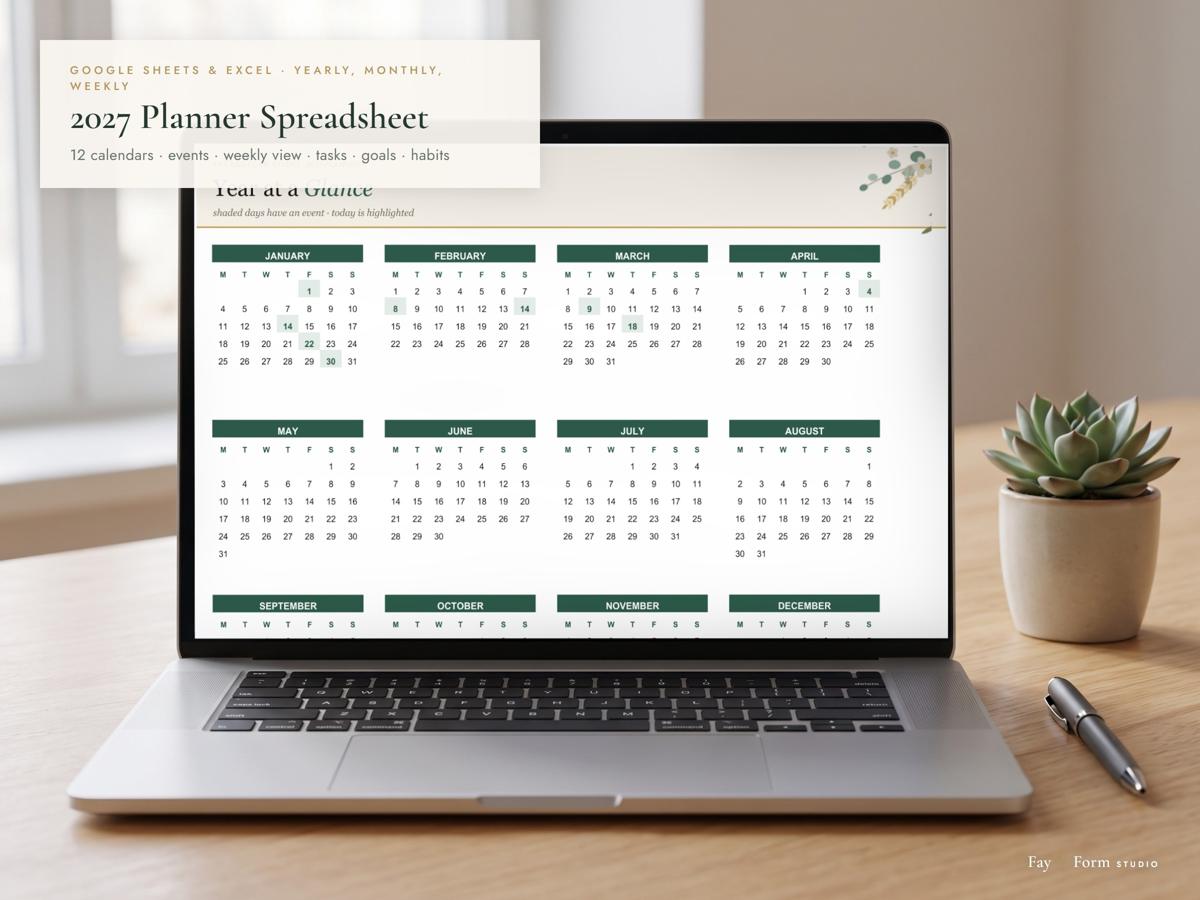
Ultimately, the best planner layout is one you'll actually use consistently. Don't be afraid to try different approaches. For those who prefer dated digital options, our 2027 Digital Planner for GoodNotes (A$16.90) offers dated weekly and monthly pages, where every date opens its own week, providing over 4,000 links for easy navigation throughout the year.
Combining Planner Layouts for More Effective Planning
You don't have to pick just one planner layout. Many Australians find that combining different types of planners provides the most complete system. This 'combined' approach allows you to use the strengths of each layout while reducing their weaknesses.
- Monthly for the big picture: Use a monthly calendar for major events, birthdays, holidays, project deadlines, and long-term goals. This is your overall view.
- Weekly for task management: Transfer key deadlines from your monthly view into your weekly spread. Use your weekly planner to break down larger tasks, schedule appointments, and plan your focus for the coming days. This is where most of your day-to-day planning happens.
- Daily for intense days: On particularly busy or complex days, you might use a separate daily sheet or even a notepad to drill down into more detail or extensive to-do lists. This is for your daily tasks.
For household planning, Fay & Form also runs a planner app. The free plan opens one planner in the app for one person, with no card needed. This can be great for a specific area, like our ready-made Ramadan kids planner, a home garden planner, or a dog care planner. Sharing with the family starts with Tier 1 at A$29 a year, allowing for a combined planning approach for the whole household.
Fay & Form Planner Options
At Fay & Form Studio, we design digital planners to fit various needs, all available as digital downloads in Australian dollars. You won't find anything posted to you. Here's a quick look at some of our offerings:
- Undated Weekly Planner Digital (A$12.90): This useful planner offers a new page for every week, complete with a focus, top three priorities, and a habit tracker. It includes 52 undated weekly pages, 12 undated monthly overviews, a year at a glance, and a master to-do list. It's compatible with GoodNotes, Notability, and other PDF apps, with a separate Phone edition so your week travels with you.
- Printable Weekly Planner (A$8.90): If you prefer the tactile experience of pen and paper, this version is designed to print beautifully at home. It includes a weekly page with focus, top 3, a habit tracker, and day boxes, ready for you to reprint as many times as you need.
- 2027 Digital Planner for GoodNotes (A$16.90): For those who like their planners dated and ready to go, this planner is for the whole year 2027. It features a Monday start, dated weekly and monthly layouts, and over 4,000 hyperlinks to navigate easily through its 92 pages.
You can explore our full range of digital planners to find the perfect fit for your planning style.
Frequently Asked Questions
Is a weekly or daily planner better for work?
For work, the choice between a weekly or daily planner depends on your job's demands. A daily planner is better if your work involves many detailed tasks, frequent meetings, or a highly variable schedule where you need to track specific hours. A weekly planner is often better for managing projects, seeing deadlines across the week, and maintaining a work-life balance, especially if your tasks are more flexible.
Can I use a weekly and daily planner together?
Yes, absolutely! Combining a weekly and daily planner is a good way for complete organisation. Use your weekly planner for your general schedule, key appointments, and weekly goals. Then, for particularly busy days, use a daily page or separate daily list to break down tasks into more detail. This gives you both the big picture and the daily focus you need.
Which planner layout is best for ADHD?
For individuals with ADHD, a flexible and visually clear planner layout is often most effective. A weekly planner can be beneficial as it provides an overview without overwhelming detail, allowing for easy adjustments and a sense of progress. Some find a daily planner helpful for focusing closely on one day's tasks, but it can sometimes lead to losing sight of the bigger picture. Experimentation with different layouts, or combining them, is key to finding what truly works well for your planning style.
Choosing the right planner layout is a personal decision. Whether you opt for the detailed focus of a daily planner, the balanced overview of a weekly planner, or the long-term vision of a monthly planner, the goal is to find a system that helps you stay organised and achieve your goals. Don't be afraid to try different options and adapt your approach as your needs change. Ready to get started? See the Undated Weekly Planner Digital.