Wedding Planning Checklist for Australian Couples
By Fay & Form Studio · 7 October 2026
Congratulations on your engagement! Getting married in Australia is wonderful, but it comes with many details. With a clear plan, you can enjoy every moment without stress. This practical wedding planning checklist Australia guide helps couples navigate the process from start to finish, ensuring no detail is missed. The wedding planning checklist that keeps couples calm puts the budget and the guest list before the venue. Let's get started.
Your Essential Wedding Planning Checklist Australia
Planning a wedding is a significant undertaking, but breaking it down into manageable steps makes it much easier. Our approach starts with the fundamentals: your budget and your guest list. Knowing these two key elements first will guide all your subsequent decisions, from venue choice to vendor selection. This guide will walk you through a 12-month timeline, covering everything from legal requirements to the final week before you say 'I do'.
Setting Your Budget and Guest List
Before you dive into Pinterest boards or venue tours, establishing your wedding budget and creating a preliminary guest list are your absolute first steps. These two elements are closely linked and will define the scope and style of your entire celebration. Without a clear budget, it's easy to overspend. Without a guest list, you can't choose an appropriately sized venue or accurately estimate catering costs. This is where a good wedding budget tracker becomes invaluable.
Your Wedding Budget Tracker:
Start by discussing how much you and your partner (and any contributing family members) can realistically afford to spend. Be honest and set a firm maximum. Then, allocate funds to major categories. Typical wedding expenses in Australia include:
- Venue & Catering: Often the largest portion, covering reception space, food, and drinks.
- Attire: Wedding dress, suit, accessories.
- Photography & Videography: Capturing your special day.
- Celebrant & Legalities: Fees for your authorised celebrant and the Notice of Intended Marriage.
- Music & Entertainment: DJ, band, live musicians.
- Flowers & Decor: Bouquets, centrepieces, ceremony and reception styling.
- Stationery: Save-the-dates, invitations, thank you cards.
- Rings: Wedding bands for both partners.
- Hair & Makeup: For the wedding party.
- Transport: For the couple and/or guests.
- Honeymoon: Often budgeted separately, but important to consider.
- Miscellaneous: Small details, unexpected costs, contingency fund (always allow 5-10%).
A good wedding budget tracker allows you to record estimated costs, actual quotes, and payments made for each item. This helps you stay on track and avoid surprises. Understanding who is contributing what also helps manage expectations and financial planning. Our Wedding Planner Digital includes a detailed Budget & Contributions section, perfect for keeping all your financial details organised and accessible, whether you're at home or on the go.
Your Guest List:
Creating your guest list involves several stages. Start with a 'dream list' of everyone you'd love to invite. Then, based on your budget and desired wedding size, refine this into your A-list and B-list. Be prepared to make tough decisions. Consider:
- Family members (immediate and extended)
- Close friends
- Work colleagues
- Children (yes or no?)
- Plus ones (for single guests)
Having a clear guest count is essential for venue capacity, catering quotes, and invitation ordering. Keep a running tally and note RSVPs, dietary requirements, and seating preferences as you go.
The 12-Month Wedding Planning Checklist and Timeline
This wedding planning checklist and timeline breaks down your tasks month by month. Remember, this is a guide; adjust it to fit your unique circumstances and how much time you have.
12-10 Months Out: The Big Picture
- Set Your Vision: Discuss your ideal wedding style, colours, and overall feel. Do you want a formal affair, a relaxed beach wedding, or something in between?
- Choose Your Wedding Date: Consider seasonality, public holidays, and personal significance. Have a few backup dates in mind.
- Research & Book Your Authorised Celebrant: In Australia, your celebrant is crucial for legalities. Start looking early as popular celebrants book out quickly.
- Research Venues: Based on your estimated guest count and budget, start shortlisting potential ceremony and reception venues.
- Create a Wedding Website (Optional): A central place for guests to find information.
- Start a Mood Board: Collect inspiration for decor, flowers, and attire.
- Consider a Wedding Planner: Decide if you want to hire a professional wedding planner to help with coordination.
9-7 Months Out: Securing the Essentials
- Lodge Your Notice of Intended Marriage (NOIM): This is a critical legal step in Australia. It must be lodged with your authorised celebrant at least one month and no more than 18 months before your wedding. Do this as soon as your celebrant is booked.
- Book Your Ceremony & Reception Venues: Once you've toured and compared, secure your ideal venue. Read contracts carefully.
- Book Key Vendors: Secure your photographer/videographer, caterer (if not in-house), and entertainment (DJ/band). These are often booked well in advance.
- Start Wedding Attire Shopping: Begin looking for your wedding dress and suits. Allow plenty of time for ordering and alterations.
- Select Your Wedding Party: Ask your bridesmaids, groomsmen, and other key roles.
- Engagement Party (Optional): If you're having one, start planning it now.
6-4 Months Out: Details and Decisions
- Send Save-the-Dates: Especially important if you have many interstate or international guests, or if your wedding is on a popular date.
- Choose Wedding Party Attire: Decide on dresses for bridesmaids and suits for groomsmen.
- Arrange Guest Accommodation & Transport: Research hotel blocks or transport options for guests, particularly if your venue is remote.
- Plan Your Honeymoon: Research destinations, book flights and accommodation. Ensure passports are up to date.
- Book Hair & Makeup Artists: Schedule trials.
- Book Florist & Discuss Decor: Finalise your floral arrangements and overall decor vision.
- Choose Wedding Cake Designer: Schedule tastings.
3-2 Months Out: Finalising and Confirming
- Send Out Invitations: Aim for 8-10 weeks before the wedding, with an RSVP date of 3-4 weeks before.
- Finalise Your Menu: Attend food tastings and confirm your menu with the caterer.
- Purchase Wedding Rings: Allow time for sizing and engraving.
- Book Transport: For the wedding day (e.g., bridal car, guest shuttle).
- Finalise Readings & Vows: Work with your celebrant on ceremony details.
- Order Wedding Favours (Optional): If you're having them.
- Purchase Gifts: For your wedding party and parents.
- Arrange Final Attire Fittings: Schedule these closer to the wedding date.
1 Month Out: The Home Stretch
- Final Attire Fittings: Pick up your dress and suit, ensuring everything fits perfectly.
- Finalise Seating Chart: Based on your RSVPs, create your table plan.
- Confirm with All Vendors: Reconfirm times, locations, and services with every supplier.
- Provide Final Guest Count: To your caterer and venue.
- Write Your Vows: If you're writing your own.
- Create a Detailed Wedding Day Timeline: Share this with your wedding party and key vendors.
- Prepare Emergency Kit: Include essentials like pain relievers, safety pins, and makeup for touch-ups.
- Arrange Payments: Ensure final payments are scheduled for vendors.
The Final Week: Breathe and Enjoy!
- Pick Up Rings: Ensure they are ready.
- Beauty Appointments: Hair cut, colour, nails, etc.
- Provide Marriage Certificate Information: To your celebrant.
- Delegate Tasks: Assign small responsibilities to trusted friends or family members for the wedding day.
- Pack for Honeymoon: Get most of it done now.
- Confirm Final Details: One last check with your celebrant, venue, and wedding party.
- Relax! Have a massage, spend time with loved ones, and get a good night's sleep.
Need a Wedding Planning Checklist Printable?
While digital tools are incredibly convenient, many couples still love the tactile experience of a physical planner. A wedding planning checklist printable allows you to jot down notes, highlight key dates, and keep all your documents in one binder or on a clipboard. It's a fantastic option for those who prefer to see their plans on paper and enjoy the process of physically ticking off tasks.
Our Printable Wedding Planner is designed specifically for this purpose. It features white pages with light tints and thin outlines, making it print beautifully whether you use a colour or black and white printer, and it uses far less ink. It's designed to live in a binder, a disc-bound planner, or on a clipboard, providing a hands-on approach to your planning. Just like its digital counterpart, it's for any couple, any style of wedding, with pages saying "Partner 1" and "Partner 2". It includes 55 pages, with a filled example (Chloe & Sam's garden wedding) to show you exactly how to use the pages effectively. It's a great companion to your digital tools or a standalone solution for keeping your wedding planning checklist printable organised.
Important Australian Legalities: The Notice of Intended Marriage
One of the most critical steps in your Australian wedding planning checklist is lodging the Notice of Intended Marriage (NOIM). This legal document must be completed and given to your authorised celebrant at least one month before your wedding date, but no more than 18 months before. This means you have a specific window of time to get this done.
When you lodge the NOIM, you'll need to provide original documents to your celebrant, typically including:
- Your birth certificates (or passports if born overseas).
- Proof of identity (e.g., driver's licence).
- If either of you has been married before, proof of divorce or a death certificate of a previous spouse.
Your celebrant will guide you through this process and ensure all paperwork is correctly filled out. It's a non-negotiable step for a legally recognised marriage in Australia, so make sure it's high on your wedding planning checklist and timeline.
Using a Wedding Budget Tracker Effectively
We've touched on the budget, but it's worth reiterating the power of a dedicated wedding budget tracker. As your plans evolve, so too might your spending. A tracker isn't just for initial estimates; it's a living document that needs regular updates.
Think of your wedding budget tracker as your financial command centre. It allows you to:
- Categorise Expenses: Break down your budget into specific categories like 'Ceremony Flowers', 'Reception Catering', 'Wedding Dress Alterations', etc.
- Track Estimates vs. Actuals: Compare your initial budget expectations with the actual quotes and invoices you receive. This helps you see where you're over or under budget.
- Monitor Payments: Keep a clear record of deposits paid, instalment dates, and final payments due. This prevents missed payments and helps manage cash flow.
- Account for Contributions: If family members are contributing, a tracker helps you note who is paying for what, avoiding confusion later on.
- Identify Areas for Savings: If one area is over budget, your tracker will quickly highlight it, allowing you to find savings in other categories.
Without a robust wedding budget tracker, expenses can quickly spiral out of control. It provides transparency and control, ensuring you make informed financial decisions throughout your planning process. The Budget & Contributions section in our planner is specifically designed to handle all these details, offering a clear overview of your financial landscape.
Fay & Form Planners for Your Australian Wedding
At Fay & Form Studio, we design digital tools to make planning calm and organised. Our planners are digital downloads, priced in Australian dollars, and available instantly.
Our main product, the Wedding Planner Digital (A$16.90), is one calm, organised home for everything from the first venue visit to the honeymoon. It's made for iPads and tablets, with a separate Phone edition for when you're out visiting venues. It features 61 pages and over 770 hyperlinks, allowing you to jump anywhere with a tap. Inside, you'll find sections for 'Our Story & Vision', 'Wedding Overview', a detailed 'Budget & Contributions' tracker, 'Ceremony Essentials', and a comprehensive '12-Month Countdown'. It also includes five event planners (Ceremony, Reception, Rehearsal dinner, plus two you name yourself) and a six-page 'Guest List' with RSVP and dietary notes, and a 'Table Plan' for up to twelve tables. There are also 'Compare Options' pages for venues or suppliers, and a dedicated 'Vendors' section. It's designed for any couple, any style of wedding, with pages saying "Partner 1" and "Partner 2".
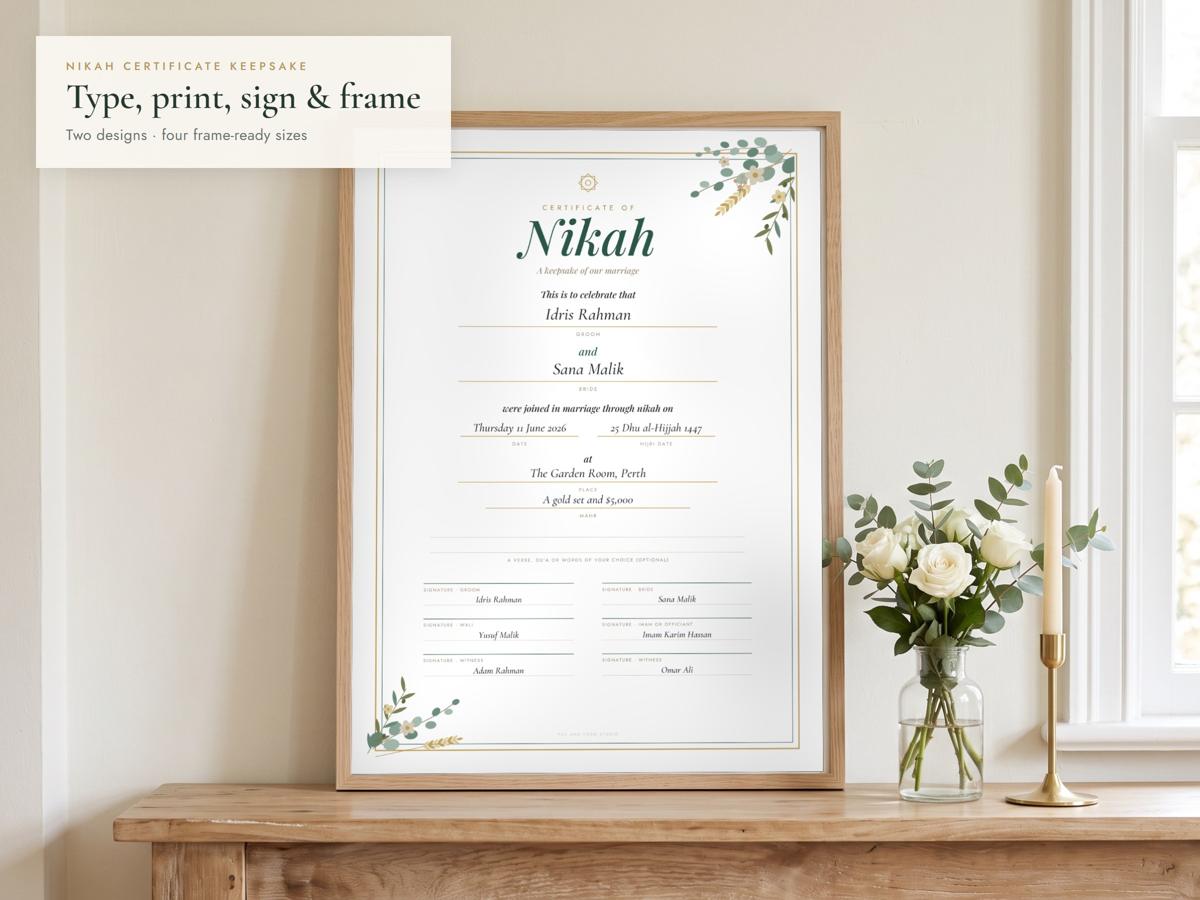
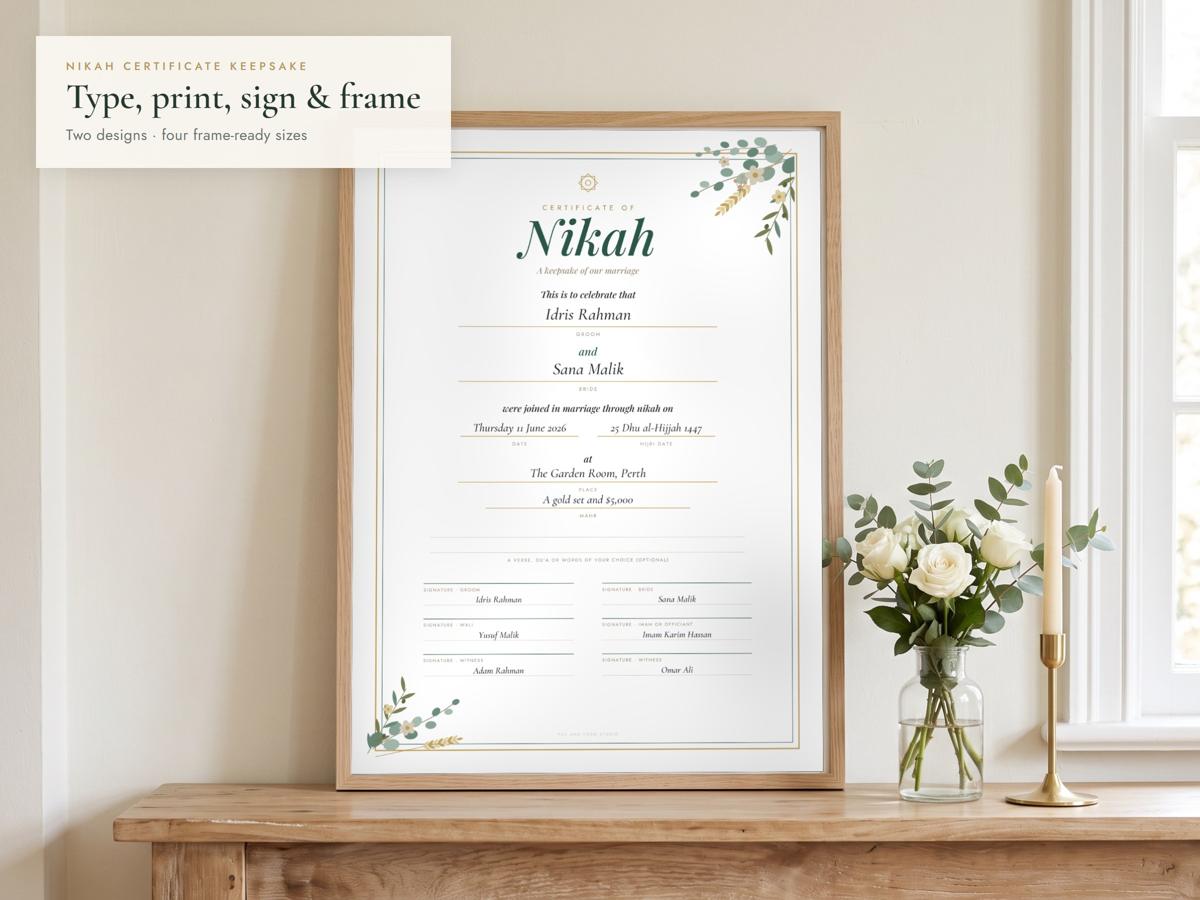
For those who prefer a physical copy, our Printable Wedding Planner (A$12.90) is the paper edition, designed to print beautifully at home and live in a binder, a disc-bound planner or on a clipboard. It has 55 pages and includes a filled example to guide you. If you are planning a Nikah, we also have specific planners to help guide you through the process, such as our Nikah planner.
Beyond wedding planning, Fay & Form also runs a household planner app. The free plan opens one planner in the app for one person, with no card needed. Sharing with the family starts with Tier 1 at A$29 a year. Ready-made app planners today are the Ramadan kids planner, a home garden planner, and a dog care planner, each with a free demo filled with sample entries.
Frequently Asked Questions
How far ahead should you start planning a wedding in Australia?
Most couples start planning their wedding in Australia between 12 to 18 months out. This allows ample time to secure preferred venues and vendors, especially during peak seasons, and manage all legal requirements like the Notice of Intended Marriage without rush.
What is the first thing to do when planning a wedding?
The very first thing to do when planning a wedding is to set your budget and create a preliminary guest list. These two decisions will inform almost every other choice, from your venue size to your catering options, making the subsequent steps much clearer.
When do you lodge the Notice of Intended Marriage?
In Australia, the Notice of Intended Marriage (NOIM) must be lodged with your authorised celebrant at least one month before your wedding date, but no more than 18 months before. It is a crucial legal requirement, so aim to complete this step as soon as you have booked your celebrant and confirmed your wedding date.
Planning a wedding is a marathon, not a sprint. With a clear wedding planning checklist and timeline, you can enjoy the path to your big day. Remember to be flexible, communicate with your partner, and don't be afraid to ask for help. A well-organised plan leads to a calm and memorable celebration. See the Wedding Planner Digital to start your organised planning today.