Your Nikah Planner for Australian Muslim Weddings
By Fay & Form Studio · 7 October 2026
Planning a wedding is an exciting time. For Muslim couples in Australia, it often means planning not just one, but several significant events: the mehndi, the nikah, and the walima. Each celebration has its own joy and traditions. A nikah planner earns its place when the mehndi, the nikah and the walima share one budget and one guest list. This guide from Fay & Form Studio offers practical advice. It helps you plan well and cover every detail.
Your Nikah Planner for Australian Couples
In Australia, preparing for a nikah and subsequent celebrations needs a careful approach. Unlike generic wedding planners, a dedicated muslim wedding planner understands the details of these events. It accounts for specific cultural and religious requirements, from the mahr to separate seating arrangements. Generic planners often miss these important parts. This can lead to extra work and potential oversights for couples.
At Fay & Form Studio, we design our planners for Australian Muslim couples. We know you need to plan the mehndi, the nikah, and the walima together, often with shared resources and guest lists. This approach helps ensure nothing is overlooked. It covers everything from your mehndi night to the main celebration of your walima.
Your Essential Nikah Planning Checklist
A thorough nikah planning checklist is very helpful. It helps you keep track of all tasks, big and small, throughout your wedding planning. Here’s a breakdown of key areas to consider:
The Nikah Essentials: Mahr, Wali, Witnesses, and Imam
- Mahr: This is a key part of the nikah contract. You need to decide if it will be given at the nikah or deferred. Discuss this openly with your partner and families.
- Wali: The bride's guardian, typically her father, who consents to the marriage.
- Witnesses: Two adult Muslim witnesses are required for the nikah ceremony.
- Imam or Officiant: Select an Imam or an authorised officiant to conduct your nikah.
- Documents Checklist: Gather all necessary documents early. This includes identification, birth certificates, and any previous marriage or divorce papers.
Australian Legal Requirements for Marriage
It's crucial to understand that in Australia, a religious nikah by itself is not a legal marriage. To be legally married, couples also need to:
- Lodge a Notice of Intended Marriage (NOIM) with an authorised celebrant at least one month before the ceremony.
- Have a ceremony conducted by an authorised marriage celebrant. Some imams are registered celebrants, which can simplify the process. Always confirm their registration.
A detailed nikah planning checklist helps you ensure all religious and legal requirements are met. This gives you peace of mind. For a broader perspective on wedding planning, see our Wedding planning checklist Australia.
For those interested in simplifying this process, the Nikah Planner Digital from Fay & Form Studio includes a dedicated "Nikah Essentials" page. It helps you track the mahr, wali, witnesses, and documents all in one place. It also offers 12 monthly countdown pages to guide you through the entire planning timeline.
Managing Your Nikah Budget Planner
Budgeting for multiple events can be complex. A dedicated budget planner makes the process simpler. It's not just about tracking expenses. It's about understanding where your money is going and how different events contribute to the overall cost. For Australian Muslim weddings, family contributions often play a big part. Your budget needs to reflect this.
Our experience shows that breaking down the budget by event and category is very effective. This allows you to see the costs of your mehndi, nikah, and walima individually. You still manage a single overall budget.
Key Budget Categories and Family Contributions
A detailed budget should include at least 11 categories, detailing estimates, actual costs, and payments made. Here’s a sample structure:
| Category | Estimate (A$) | Actual (A$) | Paid (A$) | Family Contribution |
|---|---|---|---|---|
| Venue & Catering | ||||
| Outfits & Jewellery | ||||
| Photography & Videography | ||||
| Decorations & Florals | ||||
| Hair & Makeup | ||||
| Music & Entertainment | ||||
| Invitations & Stationery | ||||
| Favours & Gifts | ||||
| Transport | ||||
| Honeymoon | ||||
| Miscellaneous / Contingency |
The "Family Contribution" column is important for many Muslim families. It helps track who is contributing what. This ensures transparency and fairness. This detailed approach ensures your nikah budget planner is accurate for your financial situation.
The Printable Nikah Planner, available for A$11.90, offers a paper edition of our digital planner. It’s designed to print beautifully at home and includes all the budget pages, making it easy to track family contributions and expenses.
Crafting Your Guest Lists and Seating Plans
Managing guest lists for multiple events like the mehndi, nikah, and walima can be tricky. You might have different guest counts for each. Or specific family members might attend only certain functions. A single, integrated guest list is very helpful.
Consolidating Guest Information
Instead of separate lists, use one master list with columns to tick off attendance for each event. This helps you track RSVPs well. It gives you a clear overview of who is invited to what. Our planners, for example, cater for up to 180 guests with a tick column for each event. This simplifies the task a lot.
Strategic Seating Arrangements
Seating plans are another area where cultural considerations are important. Many Muslim weddings require separate sections for men and women, or specific family groupings. A flexible table plan that allows for these distinctions is very useful. Look for a planner that includes a "section" field for family, men's and women's, or mixed seating across a 12-table plan. This ensures your reception reflects your preferences and cultural norms.
When planning your events, consider whether you want to combine the nikah and walima on the same day. This can impact your guest list management and overall timeline. For more insights on this, you might find our article Nikah and walima on the same day helpful.
Beyond the Basics: What a Muslim Wedding Planner Covers
A good muslim wedding planner goes beyond generic categories. It provides dedicated space for elements unique to Muslim weddings. This ensures a complete and culturally relevant planning experience. It includes detailed sections for each event and practical tools for managing vendors and personal touches.
Event-Specific Planning
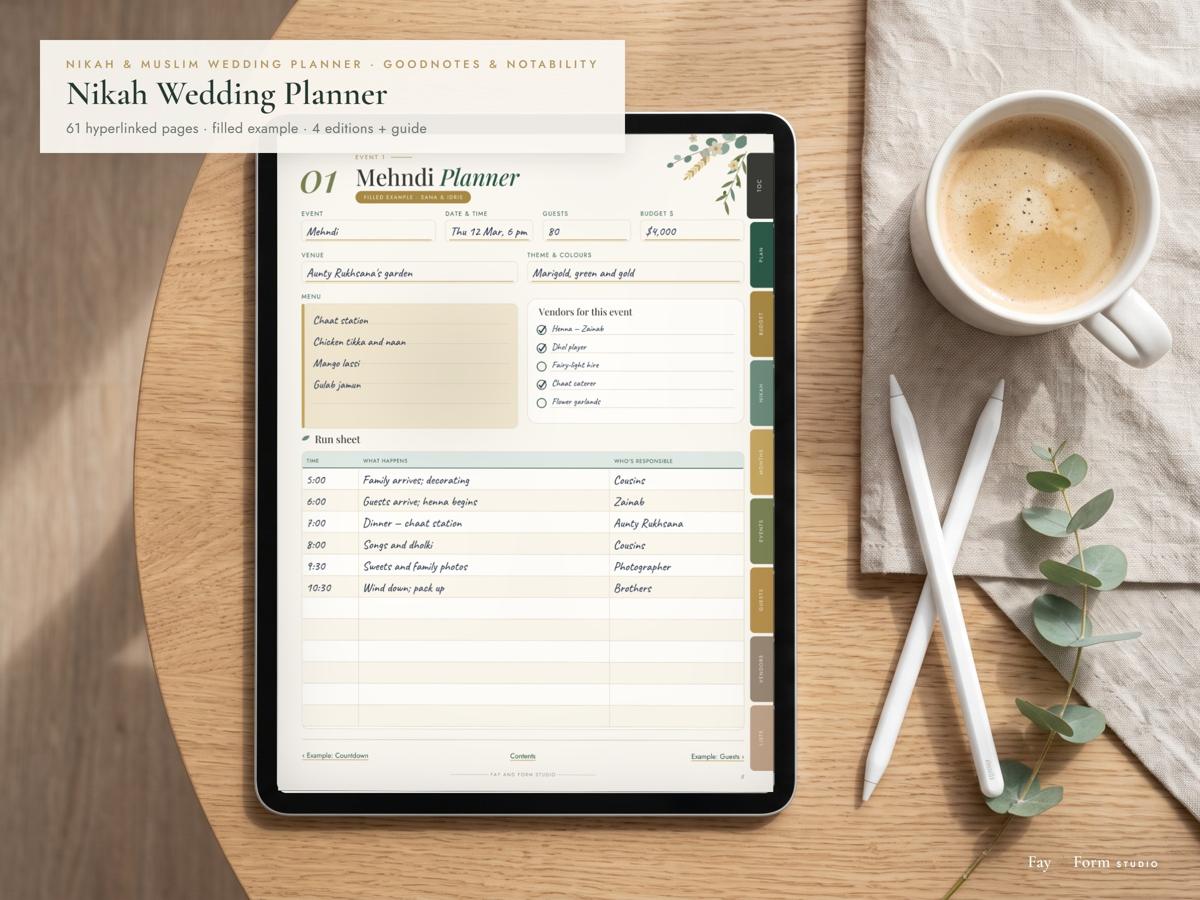
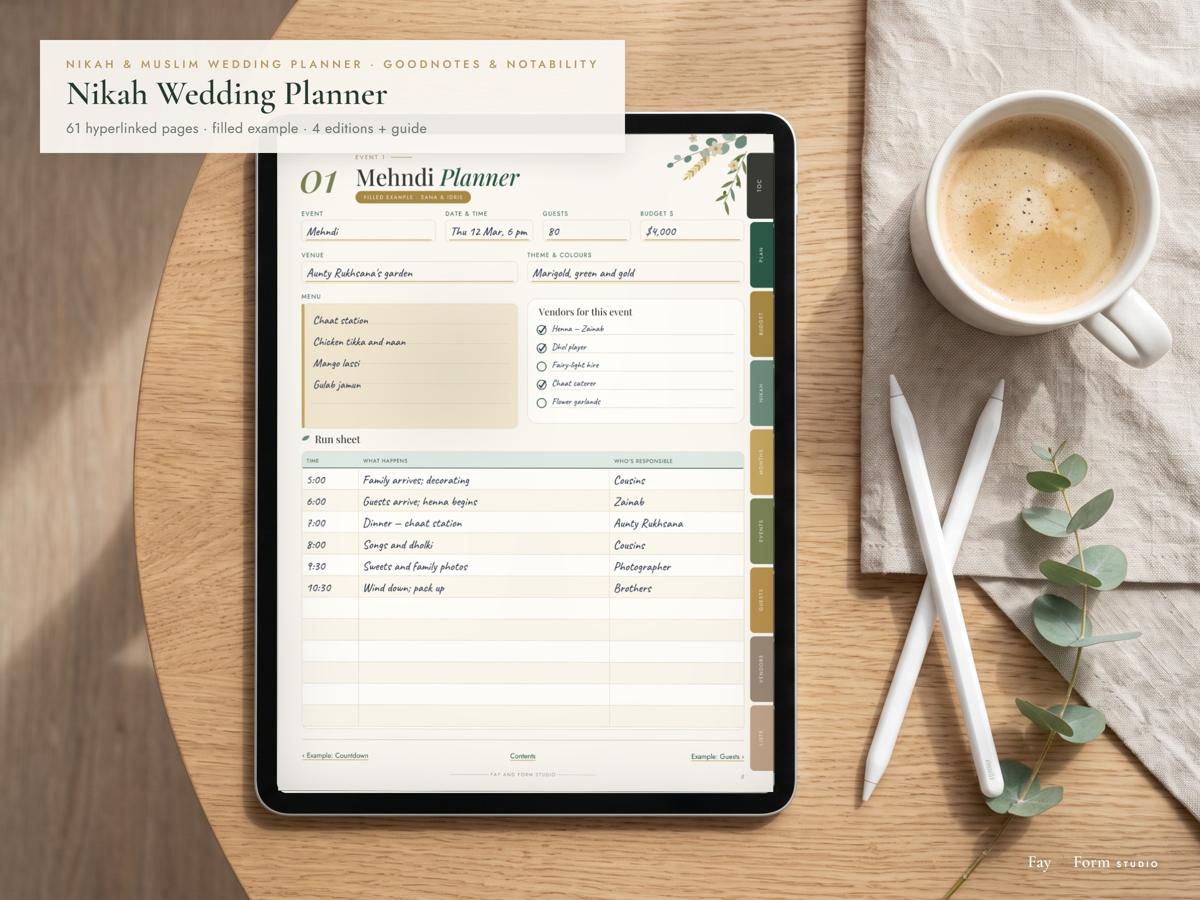
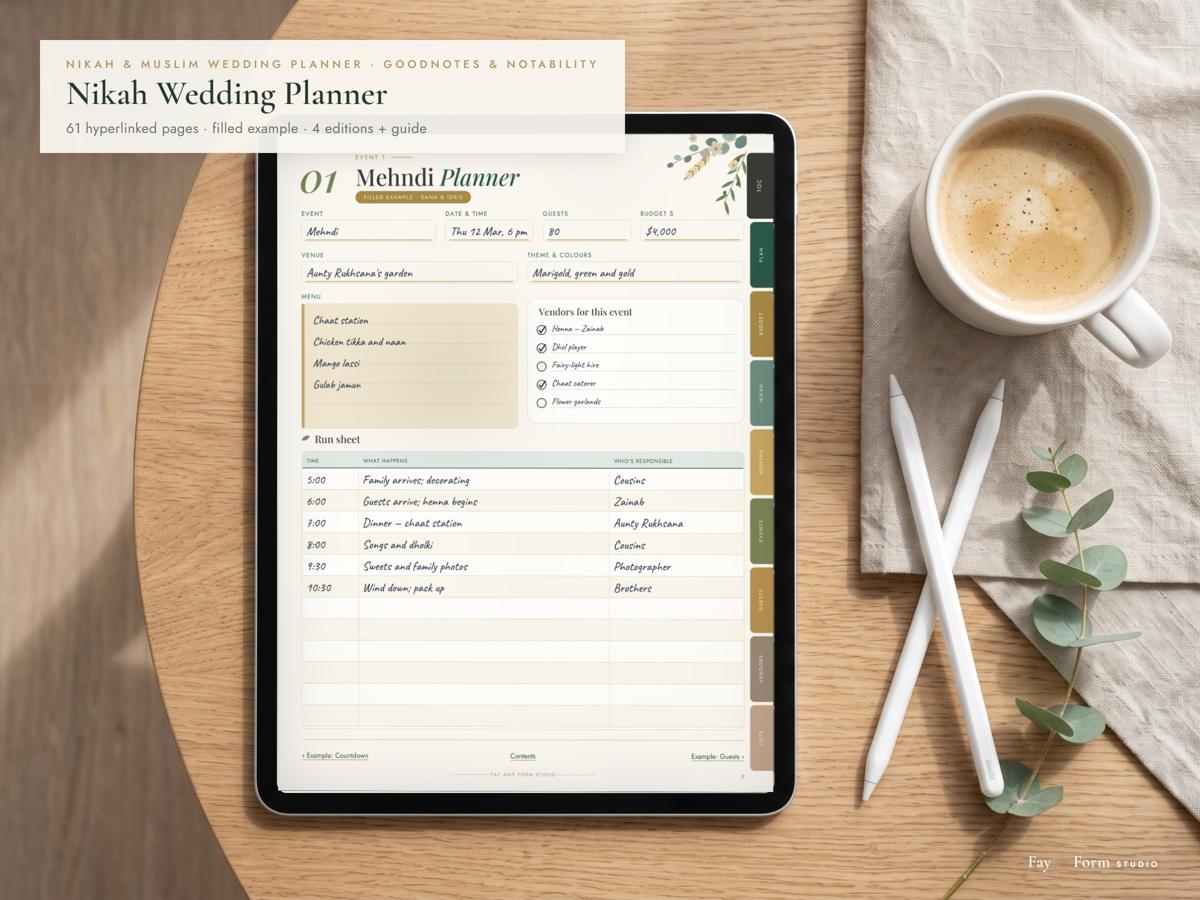
Your planner should offer separate pages for each major event. This includes your Mehndi, Nikah, and Walima. Beyond these, you might want to plan for an engagement party, dholki, henna night, zaffa, or rukhsati. Having two customisable event pages allows you to customise the planner for your specific celebrations. Each event page should cover venue details, menu choices, vendor contacts, and a detailed run sheet for the day.
Vendor Management and Personal Touches
From comparing vendors to tracking payments, a good planner keeps all your vendor information organised. Meeting notes, a complete wedding checklist, and specific sections for Outfits & Henna ensure every aspect of your wedding week is accounted for. Don't forget sections for Gifts & Thank-yous, and even a Honeymoon planner, to complete your planning.
For those looking for personalised touches, remember that personalised Nikah invitations are available from A$29. These can set the tone for your celebration and make your guests feel truly special.
Fay & Form Studio's Nikah Planning Tools
At Fay & Form Studio, we understand the specific needs of Muslim couples. Our range of digital downloads provides practical, beautiful tools for your wedding planning. All are priced in Australian dollars. You can explore our full nikah wedding collection.
- The Digital Planner (A$16.90): This complete planner brings the mehndi, the nikah, and the walima together in one place. It includes 61 pages with over 770 links for easy navigation. It has separate event pages, a guest list with tick columns for each event, family contribution sections in the budget, and a dedicated Nikah Essentials page for the mahr, wali, witnesses, and documents. It even comes with a filled example (Sana & Idris) to guide you.
- The Printable Planner (A$11.90): For those who prefer a paper planning experience, this is the paper edition of our digital planner. It’s designed to print beautifully at home and includes all the budget pages, making it easy to track family contributions and expenses.
- Nikah Certificate Keepsake (A$9.90): Celebrate your nikah with a beautiful certificate to frame and keep. This keepsake allows you to type your details straight into the PDF, then print, sign, and frame. It comes with two designs (Botanical and Geometric) in four frame-ready sizes, with 28 fields you can fill in, including names, date, place, and signatures.
All Fay & Form planners are digital downloads. Nothing is posted to you. For couples who love digital organisation, Fay & Form also offers household planner apps. Our current ready-made app planners include a Ramadan kids planner, a home garden planner, and a dog care planner. You can open one planner in the app for free. Sharing with the family starts with Tier 1 at A$29 a year.
Frequently Asked Questions
What do you need for a nikah in Australia?
For a religious nikah ceremony in Australia, you typically need the consent of the bride's wali (guardian), two adult Muslim witnesses, an Imam or authorised officiant, and the agreed-upon mahr. You will also need to gather personal identification documents.
Is a nikah a legal marriage in Australia?
No, a religious nikah by itself is not a legal marriage in Australia. To be legally recognised, couples must also lodge a Notice of Intended Marriage (NOIM) with an authorised celebrant at least one month before the ceremony and have the marriage solemnised by an authorised marriage celebrant. Some imams are registered celebrants.
How long does it take to plan a nikah and walima?
The planning timeline can vary greatly depending on the scale and complexity of your events. However, a complete nikah and walima typically benefit from 6 to 12 months of planning. This allows enough time for venue booking, vendor selection, guest list finalisation, and managing all religious and legal requirements. Some couples might plan in less time, but a longer period offers more flexibility and reduces stress.
Who pays for the walima?
Traditionally, the walima (the wedding banquet) is hosted and paid for by the groom and his family. However, in modern Australian contexts, this can vary. Many couples choose to share costs, or families may contribute in different ways. It's important for both families to openly discuss financial contributions early in the planning process to avoid misunderstandings. A dedicated nikah budget planner can help track these contributions.
Conclusion
Planning your nikah, mehndi, and walima is a beautiful time that deserves careful attention to detail. By using a complete nikah planner, you can ensure that every aspect is managed effectively. This includes religious essentials, legal requirements, and cultural traditions. This structured approach allows you to focus on the joy of your union and the celebrations with your loved ones.
Ready to start planning your Muslim wedding with confidence and clarity? See the Nikah Planner Digital.