Journal · Planning and productivity
Organising Your Teacher Planner for a Smooth Year
By Fay & Form Studio · 7 October 2026
For primary and secondary teachers across Australia, staying organised is key to a successful school year. This means having a reliable system to manage lessons, classes, and administrative tasks. A teacher planner should be set up for four terms, not twelve months. This approach directly supports the Australian school calendar. A well-structured planner can make all the difference.
At Fay & Form Studio, we understand the specific needs of Australian educators. We design planners that are practical and easy to use. Our goal is to help you reduce stress and focus on teaching. Let's explore how to set up your planner for the four-term school year.
What Should a Teacher Planner Include?
A truly effective planner is more than just a diary. It's a central hub for all your professional responsibilities. It needs to cater to the unique rhythm of the Australian school year. When considering what should a planner include, think about these core components:
- Term Overviews: A high-level view of each term's units, major assessments, and key events.
- Weekly Lesson Plans: Detailed grids for daily lessons, duties, and meetings.
- Timetables: Clear schedules for both Week A and Week B if applicable.
- Class Lists and Mark Tracking: Easy access to student information and assessment results.
- Unit Planning: Structured templates for developing learning intentions and lesson sequences.
- Communication Logs: A place to record interactions with parents and carers.
- Meeting Notes: Dedicated sections for important discussions and action items.
- Wellbeing Space: A small section to reflect on your week and track personal goals.
- Relief Notes: Prepared information for substitute teachers.
These features ensure that your planner is a comprehensive tool. It moves beyond simply recording appointments. It becomes an active partner in your teaching practice.
Setting Up Your Teacher Planner Australia for Four Terms
The Australian school year runs for four distinct terms. Each term has its own start and end dates, which can vary by state and territory. This structure means your planner needs flexibility. It must adapt to these specific term dates.
Instead of a rigid yearly calendar, a term-based planner offers adaptability. Our Teacher Planner Digital, for example, is designed with this in mind. It provides 46 continuous teaching weeks. Each week is clearly labelled with its term and week number. This makes it suitable for Australia and New Zealand's four-term systems.
Term Overviews: Your Strategic Map
Start each term by filling out a Term Overview. This is your strategic map for the next 10-11 weeks. Our planners include six Term Overviews, which you can name yourself. Use these pages to:
- Outline Units and Assessments: List the major units you'll cover for each class. Note down key assessment dates and types.
- Record Events: Include school assemblies, excursions, public holidays, and professional development days.
- Set Focus Areas: Identify specific teaching strategies or student needs you want to concentrate on.
- Reflect: At the end of the term, jot down what went well and what could be improved. This informs your planning for the next term.
Year & Term Dates
Keep a dedicated section for your specific year and term dates. This is particularly important because dates differ across states. Having this information at a glance prevents confusion. It helps you accurately plan ahead.
Weekly Planning and Timetables
Weekly Teaching Grids
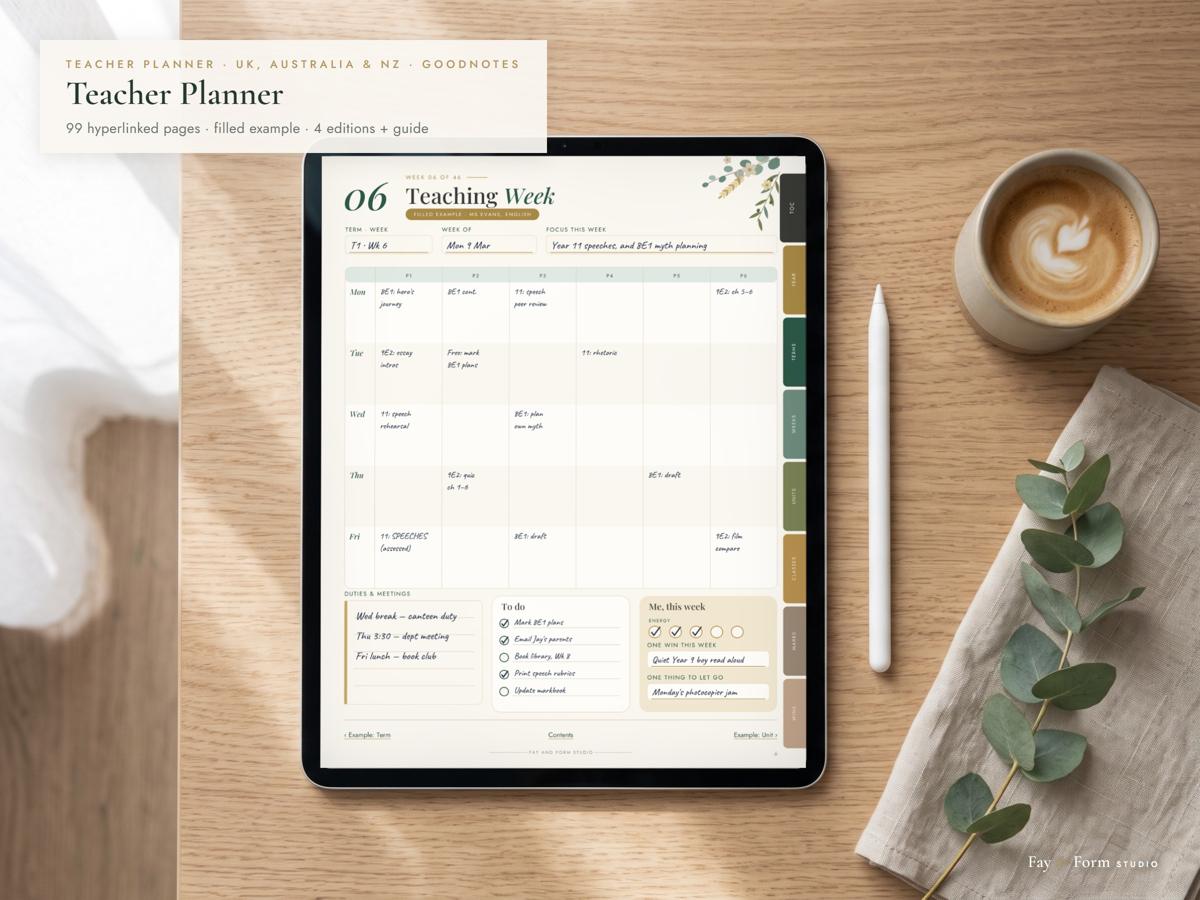
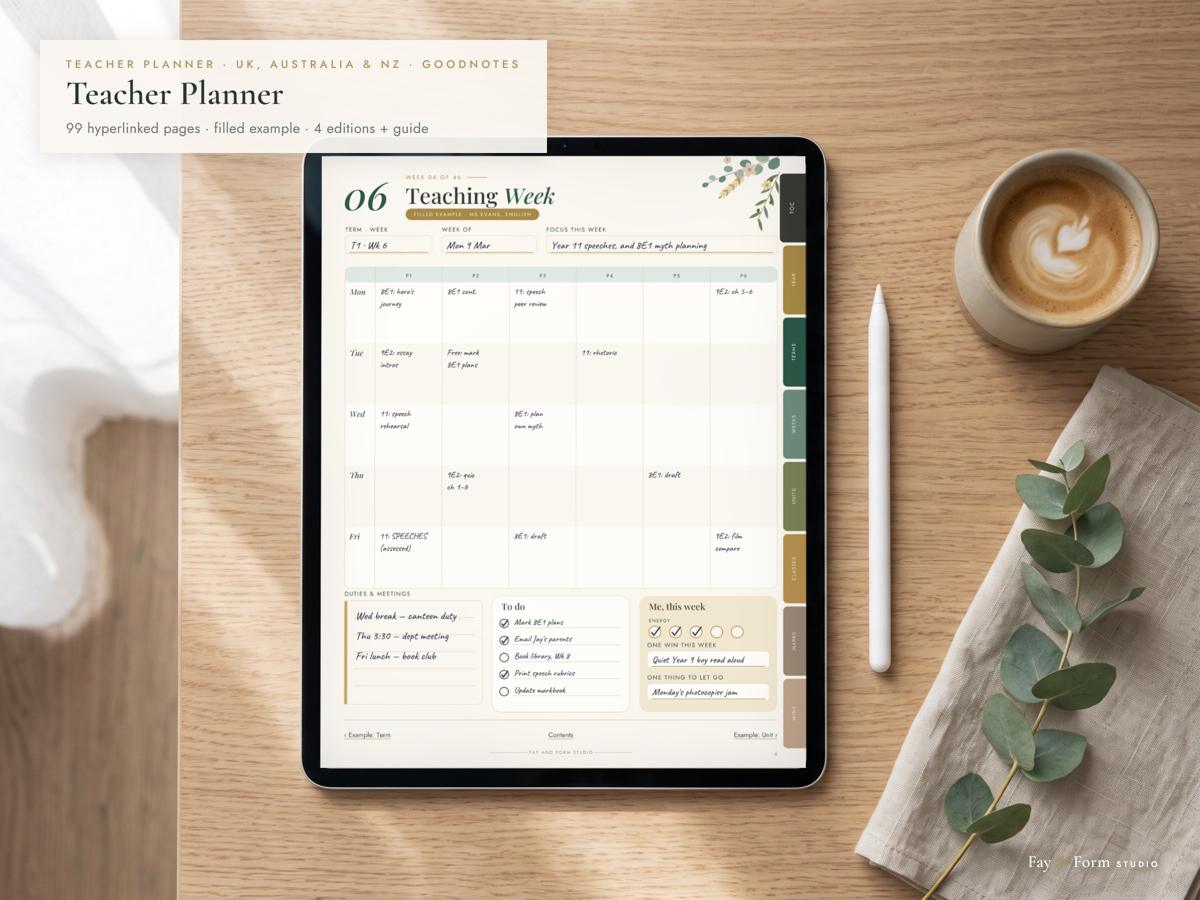
Most Australian teachers work with a 5-day teaching week. Many secondary schools use a rotating Week A and Week B timetable. Your planner needs to accommodate this. Our Teacher Planner Digital offers a 5-day × 6-period lesson grid for each of the 46 teaching weeks. This provides ample space for lesson details.
For example, Ms Evans, a secondary English teacher, uses her planner to map out her Term 1 lessons. She details learning objectives, activities, and resources for each period. This structured approach ensures she's always ready for her classes.
Timetables: Week A and Week B
Dedicate clear pages to your Week A and Week B timetables. These should include your six teaching periods. Also, remember to include before school duties, break times, lunch, and after school commitments. Visualising your entire week helps you manage your time effectively.
Duties, Meetings, and To-Do Lists
Beyond lessons, teachers have many other responsibilities. Your weekly spread should include:
- Duties and Meetings: A section to note down yard duty, staff meetings, and parent-teacher interviews.
- To-Do List: A running list of tasks, from marking to photocopying. Prioritise these daily or weekly.
- "Me, this week" Wellbeing Strip: A small but important space for self-care. Use it to track personal goals or simply jot down a positive moment.
Managing Classes, Assessments, and Records
Class Lists and Markbooks
Having easily accessible class lists is crucial. Our planners provide six class lists. These are linked directly to six corresponding markbooks. Each markbook can track up to 28 students across 10 tasks. You can edit task names and 'out of' scores. This flexibility allows you to adapt to different subjects and assessment types. It helps you monitor student progress throughout the term. For instance, you might track a mix of quizzes, assignments, and participation marks.
Unit Planners
Before diving into weekly lessons, use unit planners to map out larger chunks of content. Our planners include four Unit Planners. These templates guide you through:
- Learning Intentions: What students should know or be able to do.
- Success Criteria: How you and students will know they have achieved the learning intentions.
- Lesson Sequence: A high-level plan of how the unit will unfold.
- Assessment: Details of formative and summative assessments.
- Differentiation: Strategies to support diverse learners.
Seating Plans
Three seating plan templates are also included. These are invaluable for classroom management and group work. You can quickly sketch out arrangements and adjust them as needed.
Parent & Carer Contact Log
Maintain a dedicated log for all parent and carer communications. This includes dates, contact methods, and a brief summary of the discussion. This record is vital for tracking student support and addressing concerns.
Relief Notes and Substitute Planning
Preparing for a relief teacher (substitute) can be a rushed task. A well-organised planner streamlines this process. Keep a section dedicated to relief notes. This should include:
- Your timetable for the day.
- Class lists with any relevant student notes (e.g., medical conditions, specific learning needs).
- Emergency procedures.
- Lesson plans for the day, with clear instructions and resources.
- Contact details for key staff members.
Having this information ready minimises disruption for your students. It also provides peace of mind for you.
Why Choose a Teacher Planner Digital?
In today's teaching environment, digital tools offer significant advantages. A digital planner can provide flexibility and convenience that traditional paper planners sometimes lack. Our Teacher Planner Digital, priced at A$19.90, is a prime example.
- Portability: Access your planner on any device – tablet, laptop, or phone. This means your plans are always with you, whether you're in the classroom, at home, or on the go.
- Interactivity: With over 1,200 links across 99 pages, navigating your digital planner is quick and intuitive. Jump from a weekly view to a specific class list or markbook with a tap.
- Fillable Format: The main download is a US Letter, fillable PDF. You can type directly into the boxes for neatness. Or, use a stylus to write by hand, just like a paper planner. A separate 'Handwriting' file is also included with no text boxes, offering a clean slate.
- Sustainability: Digital planners are an eco-friendly choice, reducing paper consumption.
- Comprehensive Content: It includes everything an Australian teacher needs: 46 teaching weeks, 6 Term Overviews, 4 Unit Planners, 6 Class Lists, 6 Markbooks, 3 Seating Plans, and more. A filled example (12 sample pages) demonstrates how Ms Evans uses it for secondary English.
For those who prefer a physical planner, our Printable Teacher Planner (A$12.90) offers the same well-designed templates. It's an undated, 33-page PDF designed to print beautifully at home. It uses light tints and thin outlines, saving ink. You can print what you need, when you need it.
Planning Ahead: Your Teacher Planner 2027
As you near the end of the school year, thoughts naturally turn to the next. A planner for 2027 needs to be just as robust and adaptable as your current one. Our undated planners mean you can start planning for the future at any time. You can simply add in the new term dates as they become available.
Thinking about your teacher planner 2027 early allows you to reflect on what worked well this year. You can then refine your planning strategies. Consider if you need more space for certain subjects or if a different weekly layout would suit you better. Our planners are designed to be flexible, ready for the specific dates of 2027 and beyond.
Fay & Form also offers household planner apps. The free plan lets one person use one planner. Sharing with the family starts at A$29 a year (Tier 1). Ready-made app planners include a Ramadan kids planner, a home garden planner, and a dog care planner. Each has a free demo with sample entries.
Frequently Asked Questions
What should a teacher planner include?
A comprehensive teacher planner should include term overviews, weekly lesson grids, timetables (A/B week), class lists, assessment trackers (markbooks), unit planners, seating plans, parent contact logs, meeting notes, and a space for personal wellbeing. It should also have a section for relief teacher notes to ensure smooth handover.
Is a digital teacher planner worth it?
Yes, a digital teacher planner can be highly worthwhile. It offers portability across devices, interactive navigation with numerous links, and the flexibility to type or handwrite notes. It's also an eco-friendly option. Digital planners like the Fay & Form Teacher Planner Digital provide a comprehensive set of features in an accessible, searchable format, making organisation more efficient.
How do I set up a teacher planner for four terms?
To set up your teacher planner for four terms, begin by dedicating a section for Year & Term Dates specific to your state. Use Term Overviews to outline units, assessments, and key events for each term. Then, fill in your weekly lesson grids, timetables, and class-specific information term by term. This term-based approach aligns perfectly with the Australian school calendar.
Ready to Organise Your School Year?
A well-chosen and well-organised planner is a powerful tool. It supports your teaching, reduces stress, and helps you stay on top of your many responsibilities. By focusing on the unique four-term structure of Australian schools, you can create a system that truly works for you.
To explore a planner designed specifically for Australian educators, See the Teacher Planner Digital.