The Weekly Meal Planner for Australian Families
By Fay & Form Studio · 7 October 2026
Life in an Australian household is often a juggle. Between work, school, sport, and everything else, getting a healthy, affordable dinner on the table can feel like a daily battle. This is where a well-structured meal planner becomes your best mate. It’s more than just writing down what you’ll eat; it’s a system to bring order to your kitchen and your budget. A meal planner saves the most when the grocery list is written from it, not next to it. We've seen how effective this approach is through our work designing planners for busy families.
A good meal plan helps you shop smarter, cook more efficiently, and waste less food. It’s about being prepared, not about being a top chef. Let's look at how Australian families can make meal planning a lasting habit.
Why a Meal Planner is Essential for Australian Households
For many Australian families, food is a significant expense. The cost of living continues to rise, and supermarket bills can quickly add up. A thoughtful plan is a powerful tool to take control of your food budget. When you know what you’re cooking, you buy only what you need. This cuts down on impulse purchases and wasted ingredients.
Beyond saving money, a meal plan saves time and reduces stress. Imagine not having to wonder what’s for dinner each night. No more frantic trips to the shops for a forgotten ingredient. Instead, you have a clear path for the week. This frees up mental space and allows you to spend more time with your family, or simply relax.
Australians are also increasingly aware of food waste. Planning helps use up ingredients before they spoil. It encourages creativity with leftovers, turning what might have been binned into another meal. This is good for your wallet and the environment.
Setting Up Your Weekly Meal Plan for Family Success
Know Your Calendar and Your Crew
- Map out your week: Note down any nights where you have late sports, after-school activities, or work commitments. These are ideal for quick meals, slow cooker dishes, or planned leftovers.
- Family input: Get everyone involved. Ask your family for their favourite meals. This makes them more likely to eat what’s on the menu and reduces complaints.
- Allergies and preferences: Keep any dietary requirements front of mind. If someone avoids gluten or dairy, ensure your plan has suitable options.
Embrace Theme Nights
Theme nights are a simple way to add variety without too much thought. They provide a framework, making your weekly meal plan easier to build. Think 'Meatless Monday', 'Taco Tuesday', 'Pasta Wednesday', 'Fish Friday', or 'Pizza Night'. This reduces decision fatigue and helps you rotate different cuisines.
The Pantry and Fridge Check
Before you even think about new recipes, check what you already have. This is crucial for saving money and reducing waste. Look in your pantry, fridge, and freezer. What ingredients are about to expire? What staples do you have in abundance? Build meals around these items first.
For example, if you have a half-eaten bag of pasta, some tinned tomatoes, and frozen mince, a bolognese is an obvious choice. If you're looking for a structured way to track what you have, our weekly meal planner template blog post offers some great ideas to get you started on this essential step.
Favourites Rotation
Don't reinvent the wheel every week. Keep a list of your family's favourite, easy-to-cook meals. Rotate these through your plan. This ensures you have go-to options for busy weeks and reduces the stress of finding new recipes constantly.
Crafting Your Meal Planner and Grocery List
Build Your List From Your Plan
Once your weekly meals are set, go through each recipe. List every single ingredient you need. Don't forget pantry staples like oil, salt, and spices, or everyday items like milk and bread. Tick off anything you already have from your pantry check.
Organise by Aisle
A smart grocery list is organised by supermarket aisle. This saves you time in the store and prevents you from backtracking. Group items like 'Produce', 'Dairy', 'Meat', 'Pantry', 'Frozen', and 'Household'.
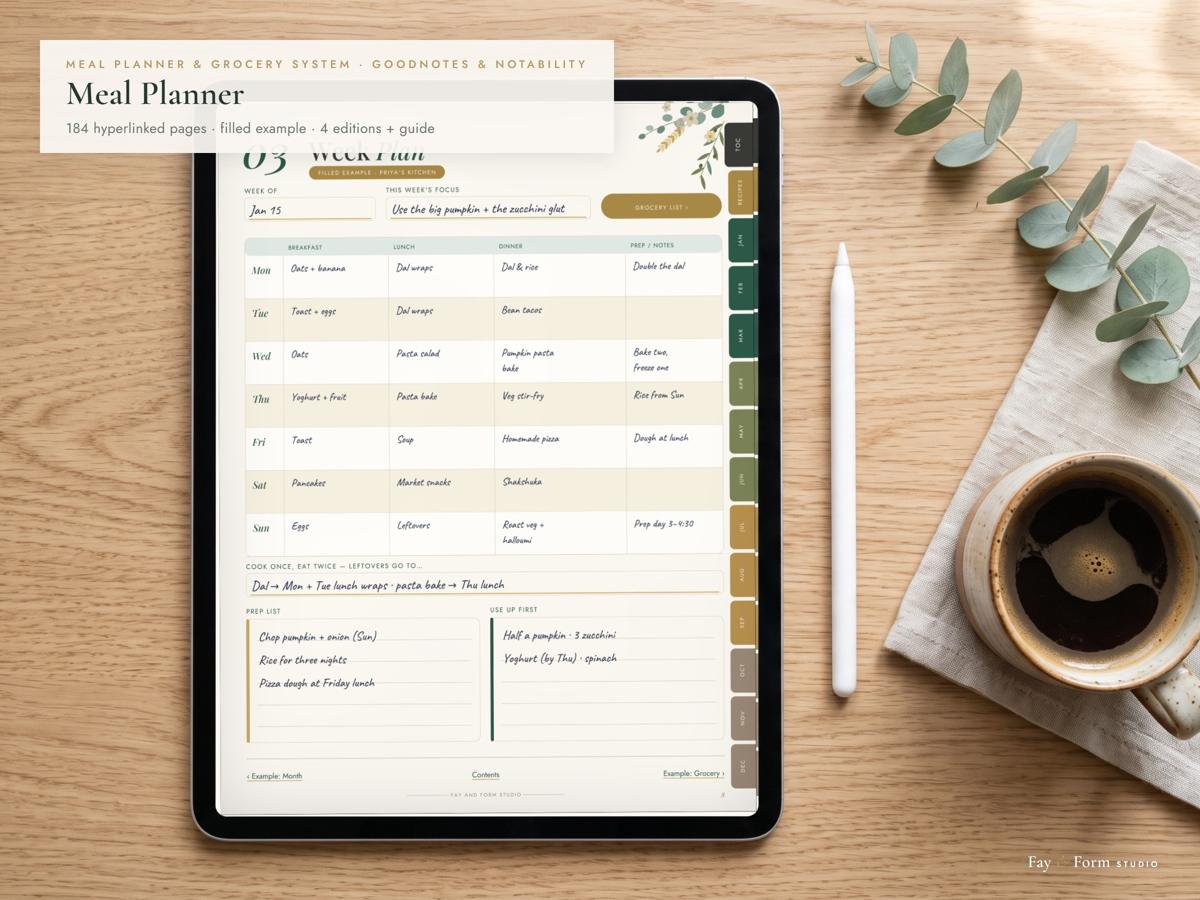
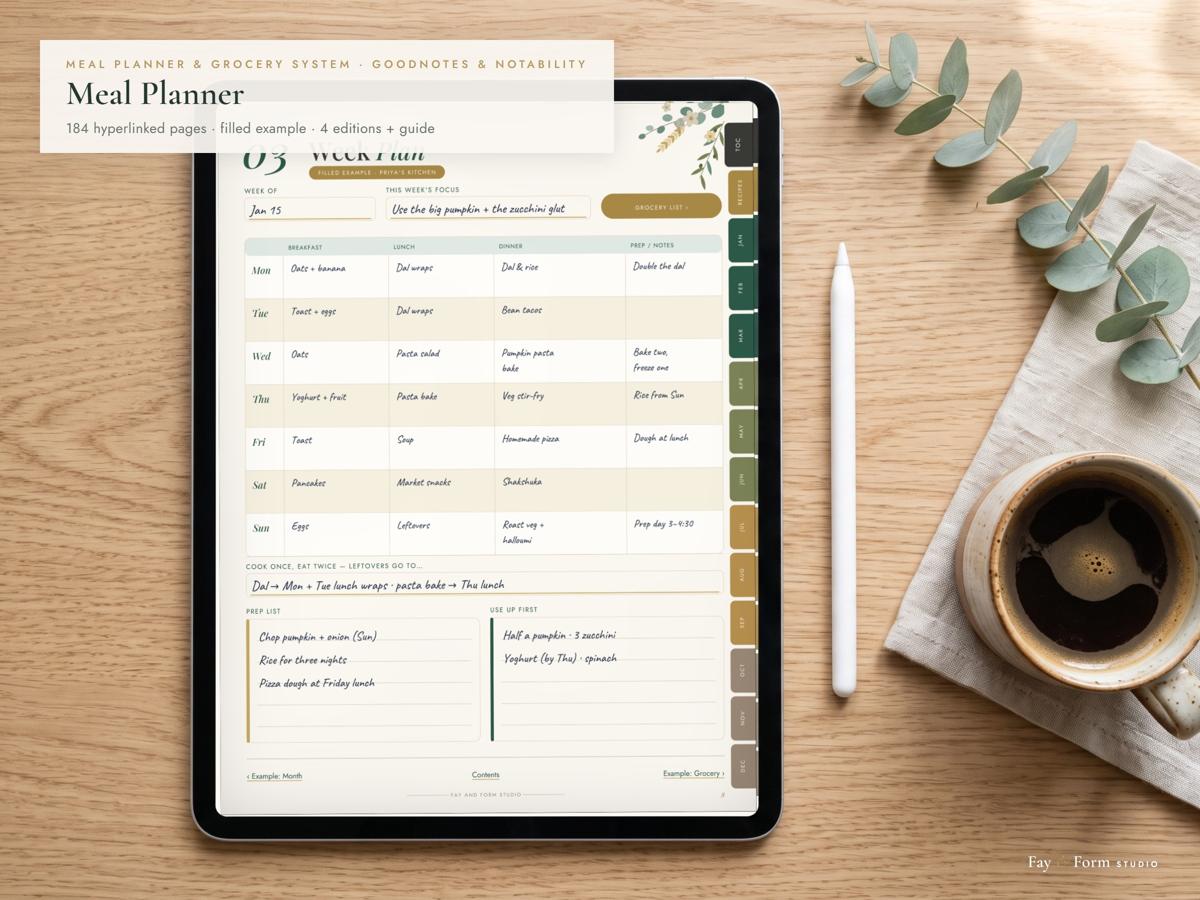
For instance, our digital planner (A$14.90) includes eight aisle cards for its grocery list, making this process easy. Every weekly plan links directly to its own grocery list and back, so you can easily move between planning and shopping.
Set a Budget and Stick To It
Before you shop, set a realistic budget for your groceries. Consider your family's needs and typical spending to set a practical weekly or fortnightly amount. A meal planner and grocery list helps you stay within your limits. Keep track of your spending as you shop. If you’re using a digital tool, this can be as simple as updating numbers on your phone.
Making Your Meal Plan Last: Leftovers and Prep Days
The Art of the Leftover
Leftovers are gold. Plan for them intentionally. Cook a larger batch of a meal on one night, knowing you’ll have enough for lunch the next day, or even a second dinner later in the week. This is often called 'cook once, eat twice'.
For example, roast a whole chicken and use the leftovers for sandwiches, salads, or a stir-fry. Make extra bolognese sauce and freeze half for another night. Always label and date your leftovers to ensure they are used safely and in time.
Dedicated Prep Days
Choose one day a week, often a Sunday, to do some food preparation. This could involve:
- Chopping vegetables for salads or stir-fries.
- Cooking grains like rice or quinoa.
- Washing and portioning fruit.
- Making a batch of healthy snacks.
- Marinating meat for later in the week.
Even an hour of prep can drastically reduce your cooking time on busy weeknights. Our Meal Planner Digital offers specific 'Prep Day' pages to help you organise this.
Choosing Your Meal Planner for Family Use
Paper Planners: The Tangible Touch
Many people love the feeling of writing things down. A paper planner offers a clear, visual overview of your week. It's easy to stick on the fridge for everyone to see. It doesn't require a screen, and it's simple to make notes and adjustments by hand.
If you prefer a paper approach, our Printable Meal Planner (A$9.90) is designed to be printed beautifully at home. It features white pages, light tints, and thin outlines, using less ink, whether you print in colour or black and white. It includes 41 undated pages with a filled example, so you can print templates as often as you need them.
Digital Planners: Flexibility and Portability
Digital planners offer immense flexibility. They can be accessed on your tablet or phone, meaning your plan and grocery list are always with you. They often include hyperlinks for quick navigation, making it easy to jump between your weekly plan, recipe index, and inventories.
Our digital planner (A$14.90) is a comprehensive Meal Planner & Grocery System. It's an Australian-priced digital download, meaning nothing is posted to you. This planner has 184 pages and over 3,500 links, allowing you to plan your week, shop once, cook what you've got, and waste less. It includes a Kitchen Profile, 12-month pages for budgeting, 52 weeks of planning, a Recipe Book with 40 cards, and inventories for your pantry, fridge, and freezer. It comes in five files, including fillable US Letter and A4 versions.
Fay & Form also runs a household planner app. The free plan opens one planner in the app for one person, with no card needed, offering a taste of digital planning. Sharing with the family starts with Tier 1 at A$29 a year. Ready-made app planners currently include a Ramadan kids planner, a home garden planner, and a dog care planner, each with a free demo filled with sample entries. You can learn more about our app and pricing options, or explore our wider range of digital planners.
Beyond the Basics: Advanced Meal Planning Tips
- Seasonal Produce: Plan meals around what's cheap and in season. This supports local farmers and often tastes better.
- Flexibility is Key: Don't be afraid to swap meals around if plans change. The goal is to reduce stress, not add to it.
- Review and Adjust: At the end of each week, take a few minutes to review your plan. What worked well? What didn't? What ingredients were wasted? Use this feedback to improve your next meal planner for family use.
Frequently Asked Questions
How do I start meal planning for a family?
Begin by checking your family's schedule and what you already have in your pantry. List your family's favourite meals to get started, and try theme nights to simplify choices. Don't aim for perfection; just start with a few meals and build from there.
How much can meal planning save on groceries?
Meal planning can significantly reduce grocery spending. By avoiding impulse buys, reducing food waste, and shopping with a precise list, families can find substantial savings. Track your spending for a few weeks to see how much you can save.
Should I plan meals for a week or a fortnight?
For most busy Australian families, a weekly meal plan is the most manageable. It's long enough to gain efficiency but short enough to adapt to changing schedules and fresh produce needs. Fortnightly planning can be overwhelming initially, but some experienced planners might find it beneficial for bulk shopping.
Bringing this planning system into your home life is a simple step that yields big results. It saves money, time, and reduces stress, giving you more space to enjoy family life. It’s about building a system that works for you, week after week. See the Meal Planner Digital.