Your Pregnancy Planner: A Guide for Expecting Parents
By Fay & Form Studio · 7 October 2026
Expecting a baby is a big adventure, full of excitement and many things to remember. For expecting parents in Australia, staying organised can make all the difference. This is where a planner comes in. A pregnancy planner turns nine months of appointments and questions into one place you can bring to every visit. It helps you keep track of everything from scans to shopping lists, making your experience smoother and calmer.
At Fay & Form Studio, we design planners to help families manage their busy lives, and a pregnancy planner is one of the most important tools you have. It’s not just about ticking boxes; it’s about creating a helpful record of your pregnancy experience. This guide will walk you through how to use your planner trimester by trimester, helping you prepare for your baby's arrival with confidence.
Why a Pregnancy Planner is Your Best Friend
Pregnancy brings a lot of new information and decisions. A dedicated planner helps you keep all this in one spot. It’s a central hub for your notes, questions, and plans. This means less stress trying to remember details and more time enjoying this special time. Think of it as your personal assistant for pregnancy.
- Stay on top of all your appointments and tests.
- Track how you're feeling and any symptoms you experience.
- Organise your thoughts and questions for your midwife or obstetrician.
- Plan for the financial side of a new baby.
- Prepare your home and hospital bag.
- Document memories you'll cherish later.
Your Pregnancy Planner Journal: Tracking Trimester by Trimester
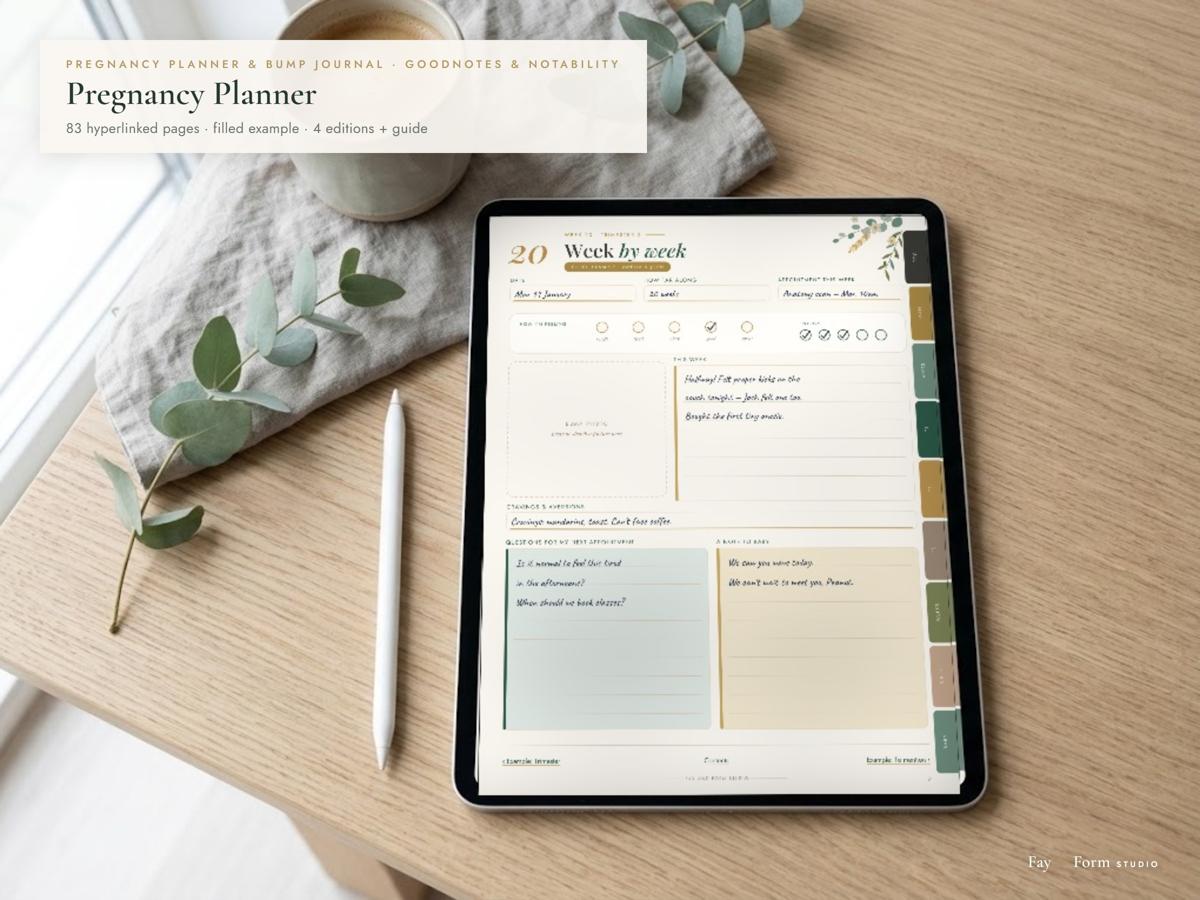
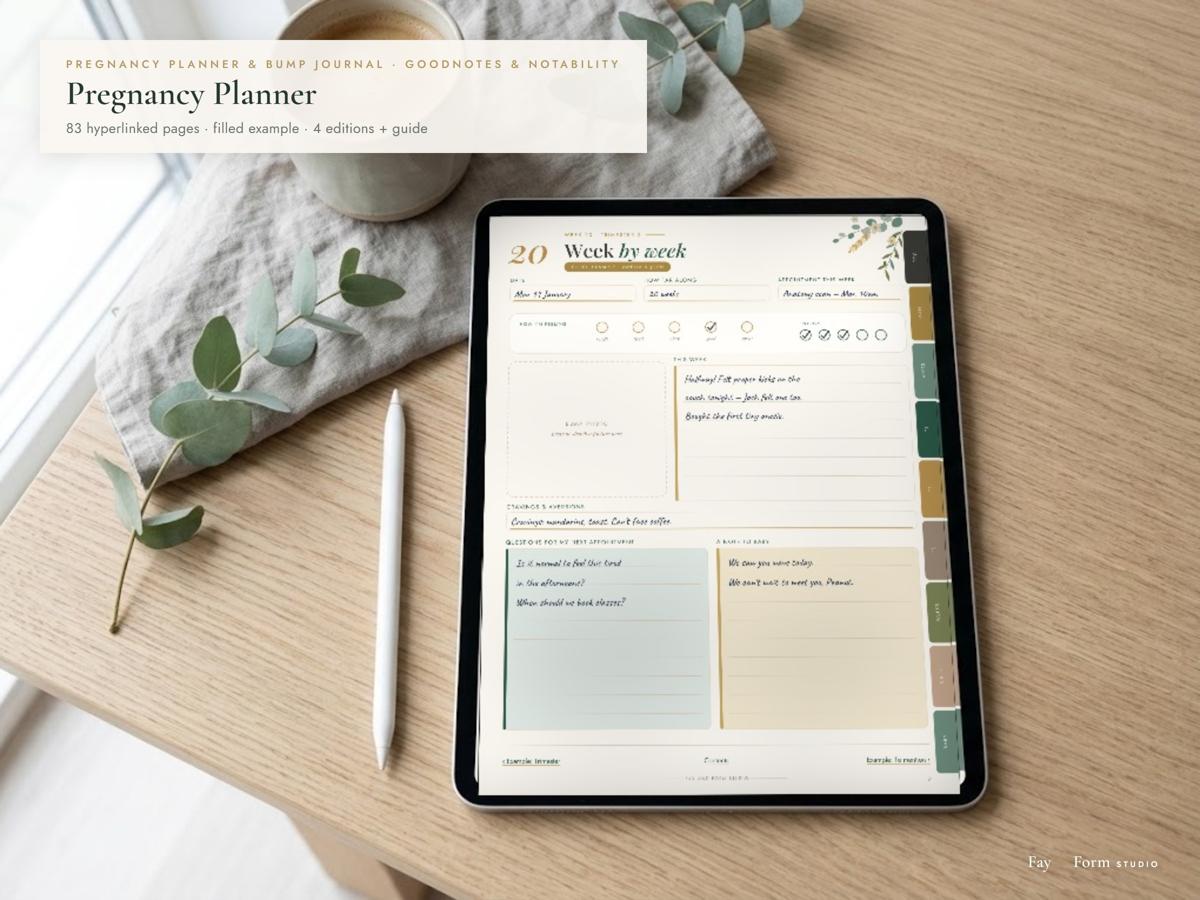
A pregnancy planner journal is more than just a list-maker; it’s a place to capture your personal experience. Our Pregnancy Planner Digital, for example, includes a weekly journal from week 4 to week 42. This allows you to write down your feelings, energy levels, cravings, and any questions you have for your next appointment. It even has a spot for a bump photo each week. Keeping a pregnancy planner journal means you’ll have a beautiful record to look back on.
First Trimester: The Beginning of Your Experience (Weeks 1-13)
The first trimester is often about discovery and early changes. Many parents-to-be feel tired or a bit queasy. A good planner helps you track these early symptoms and ensures you don't miss important first appointments.
- Appointments and Questions: Your first few appointments are crucial. Use your planner to note down dates for your initial GP visit, blood tests, and dating scan. Write down any questions you have about diet, exercise, or early pregnancy symptoms. Remember, your midwife, GP, or obstetrician is your primary source for medical advice.
- Symptoms and Notes: Record how you're feeling each day. Are you experiencing morning sickness? Fatigue? Changes in appetite? This information can be helpful for your care team and for understanding your own body's changes.
- Early Planning: Start thinking about your care team. Will you go public or private? Who will be your lead care provider?
Second Trimester: Feeling More Like Yourself (Weeks 14-27)
Often called the 'honeymoon period' of pregnancy, the second trimester usually brings more energy and the exciting milestone of feeling your baby move. This is a great time to look closer at your planner.
- Appointments and Questions: You’ll have your anatomy scan around 18-22 weeks. This is a big one! Use your planner to list questions about the scan results or any concerns you might have. Continue to log your regular midwife or obstetrician appointments.
- Symptoms and Notes: Keep tracking your energy levels and any new sensations. When did you first feel your baby kick? How often do you feel movement? These notes are invaluable.
- Baby Gear Budget: Start thinking about what baby items you’ll need. Use a section in your planner for a baby gear budget. This helps you manage costs for things like a cot, pram, car seat, and clothing.
Third Trimester: Preparing for Arrival (Weeks 28-40+)
The final stretch! The third trimester is all about getting ready for your baby’s arrival. Your planner will become your go-to for final preparations.
- Appointments and Questions: Appointments become more frequent. Track these carefully. Discuss your birth preferences with your care team and write down any last-minute questions about labour, birth, or postpartum care.
- Symptoms and Notes: You might experience new symptoms like Braxton Hicks contractions, swelling, or more fatigue. Keep noting these down.
- Birth Plan: Start putting together your birth preferences. This isn't a rigid plan, but a guide for your care team on your wishes for labour and birth.
- Hospital Bag: Prepare your hospital bag well in advance. Our planners include a dedicated hospital bag list.
- Preparing the Home: Nesting instincts often kick in. Use your planner to make lists for preparing the nursery, organising baby clothes, and stocking up on essentials.
Essential Pregnancy Checklists for Every Stage
Checklists are the backbone of any good planner. They help break down big tasks into manageable steps. Whether it's for appointments, baby gear, or preparing for birth, a comprehensive pregnancy checklist ensures nothing is forgotten.
Our Fay & Form Pregnancy Planner Digital includes trimester overviews with gentle checklists to guide you. These help you tick off important milestones like:
- Booking antenatal classes.
- Choosing a paediatrician.
- Installing the car seat.
- Washing baby clothes.
- Setting up the nursery.
Using a checklist can reduce anxiety by giving you a clear path forward. It’s also a great way to involve your partner in the planning process.
Budgeting for Baby: A Practical Approach
Bringing a baby home involves financial planning. A dedicated section in your planner for a baby budget is essential. This isn't about spending a fortune, but about being prepared.
| Category | Examples of Items |
|---|---|
| Nursery | Cot, mattress, change table, storage, monitor |
| Gear & Transport | Pram, car seat, baby carrier, nappy bag |
| Feeding | Bottles, steriliser, breast pump, formula (if needed) |
| Nappies & Wipes | Disposable or cloth nappies, wipes, nappy rash cream |
| Clothing | Onesies, bodysuits, sleepsuits, blankets |
| Health & Safety | First aid kit, thermometer, baby gates |
| Postpartum | Maternity pads, nursing bras, freezer meals |
Break down your budget into 'must-haves' and 'nice-to-haves'. Look for second-hand items in good condition for bigger purchases like prams or cots to save money. Remember, a new baby doesn't need everything immediately. Focus on the essentials first.
Crafting Your Birth Preferences
Your birth preferences (often called a birth plan) outline your wishes for labour, birth, and the immediate postpartum period. It’s a communication tool for you and your care team. Your planner provides a dedicated space to draft this important document.
- Labour Environment: What atmosphere do you prefer? Music, lighting, movement?
- Pain Relief: Your preferences for medical pain relief (e.g., epidural) and non-medical options (e.g., shower, massage, gas).
- Positions: What positions would you like to try during labour and birth?
- Interventions: Your thoughts on interventions like induction, episiotomy, or C-section, should they become necessary.
- Partner's Role: How your partner can best support you.
- After Birth: Wishes for skin-to-skin contact, cord clamping, and feeding.
Discuss these preferences with your midwife or obstetrician well before your due date. They can offer advice and ensure your expectations are realistic within the context of your health and the hospital's policies.
The Hospital Bag Checklist: What to Pack for You, Baby, and Partner
Packing your hospital bag is a fun and practical step in preparing for birth. It’s best to have it ready by about 36 weeks, just in case. A detailed hospital bag checklist in your planner ensures you don't forget anything important.
For You:
- Your birth preferences document and planner.
- Comfortable clothes for labour and after birth.
- Toiletries (toothbrush, toothpaste, shampoo, conditioner, deodorant).
- Maternity pads and comfortable underwear.
- Nursing bras and breast pads (if breastfeeding).
- Snacks and drinks.
- Phone charger.
- Slip-on shoes or thongs.
For Baby:
- Several outfits (newborn size).
- Nappies and wipes.
- Swaddles or blankets.
- Car seat installed in the car for the trip home.
For Your Partner:
- Change of clothes.
- Toiletries.
- Snacks and drinks.
- Phone charger.
- Comfortable shoes.
- Entertainment (book, tablet).
The Fay & Form Pregnancy Planner Digital includes a comprehensive hospital bag list, making this step straightforward.
Choosing the Best Pregnancy Planner for You
When looking for the best pregnancy planner, consider what works for your lifestyle. Do you prefer digital convenience or the feel of paper? Fay & Form offers options to suit both preferences, designed with Australian parents in mind.
Our Pregnancy Planner Digital (A$14.90) is perfect for those who love to keep everything on their device. It's a comprehensive Pregnancy Planner & Bump Journal designed to keep your appointments, questions, and plans in one calm place. You can write a little each week to remember it all. It features a weekly journal from week 4 to week 42, trimester checklists, birth preferences, and a hospital bag list. It also includes a letter to baby and your birth story at the end. What's inside this 83-page planner are over 1,000 links for easy navigation. You receive five files with every download: a US Letter fillable version, a handwriting version (no text boxes), an A4 version for Australia, the UK and Europe, a separate layout for phone screens, and a Start Here guide. It works wonderfully in your favourite PDF annotation app.
Fay & Form Printable Pregnancy Planner
If you prefer a physical record, our Printable Pregnancy Planner (A$9.90) is the paper edition of our digital planner. It’s designed to print beautifully at home. With 77 undated pages, it features white pages, light tints, and thin outlines, so it prints well in colour or black and white and uses far less ink than a full-colour planner. You can print one copy of each template and reprint whenever you need more. Both Fay & Form planners are digital downloads, so nothing is posted, and are priced in Australian dollars.
While we don't offer a pregnancy planner as an app directly, Fay & Form does run a household planner app. The free plan opens one planner in the app for one person, with no card needed. Sharing with the family starts with Tier 1 at A$29 a year. Ready-made app planners today include the Ramadan kids planner, a home garden planner, and a dog care planner, each with a free demo. For your pregnancy experience, the digital or printable planner is the dedicated tool.
Frequently Asked Questions
When should I start using the best pregnancy planner?
It’s best to start your planner as soon as you find out you’re pregnant, or even when you start trying to conceive. This allows you to track early appointments, symptoms, and feelings from the very beginning. The Fay & Form Pregnancy Planner Digital includes a weekly journal starting from week 4, so it's ready to go when you are.
What appointments should I track during pregnancy?
You should track all appointments with your GP, midwife, or obstetrician, including initial confirmation, regular check-ups, blood tests, and scans (like the dating scan, anatomy scan, and growth scans). It's also helpful to note down any antenatal classes or specialist referrals. Using a meal planner might also be useful to track your nutritional intake during this time.
What goes in a hospital bag checklist?
A comprehensive hospital bag checklist should include items for you (comfortable clothes, toiletries, maternity pads, snacks, phone charger), for your baby (several outfits, nappies, wipes, swaddles, car seat), and for your partner (change of clothes, toiletries, snacks, phone charger). Ensure you pack your birth preferences and your planner itself!
This planner is a practical tool that supports you through every stage of pregnancy. It helps you stay organised, informed, and calm as you prepare to welcome your new baby. From tracking appointments to planning your hospital bag, it keeps all your important information in one accessible place.
Ready to bring calm and organisation to your pregnancy experience? See the Pregnancy Planner Digital.