Journal · Wellbeing and growth
Choosing Your Gratitude Journal in Australia: A Practical Guide
By Fay & Form Studio · 7 October 2026
Starting a gratitude practice is a simple way to bring more positivity into your daily life. For many Australians, finding the right tool to support this habit is the first step. Choosing a gratitude journal in Australia means considering what fits your lifestyle best. The best gratitude journal is the one that is within reach at the same time every day. Whether you prefer pen and paper or a digital screen, the key is consistency.
As designers of wellbeing planners at Fay & Form Studio, we understand that a good journal should be easy to use and genuinely helpful. It shouldn't feel like a chore. This guide will help you find the right journal for your practice, comparing different types available, from printed books to digital files and dedicated apps, so you can find the right match for your needs.
Why Keep a Gratitude Journal?
Taking a few minutes each day to notice the good things can shift your perspective. It's not about ignoring challenges, but about balancing them with appreciation. Regular gratitude practice can help you feel more positive, reduce stress, and even improve your sleep. It creates a mindful moment in your busy day. A structured journal provides prompts and a dedicated space for this reflection. It helps turn an abstract idea into a concrete daily habit. You don't need to write long essays; a few simple sentences are enough to make a difference.
Choosing a Journal in Australia: Your Options
When you're looking for a journal for this practice in Australia, you'll find a few main types. Each has its own benefits, depending on how you like to work and what tools you already use.
- Printed Journals: These are traditional paper books you buy from a shop.
- Printable Gratitude Journal Templates: Digital files you print at home.
- Digital Gratitude Journals: Interactive PDF files for tablets or computers.
- Gratitude Journal Apps: Dedicated software for phones or tablets.
Let's look at each option in more detail.
Printed Journals from Shops
Many people love the feel of a physical book and the act of writing by hand. Printed journals are widely available in bookstores and gift shops across Australia. They offer a tangible experience that can feel very grounding. If you are searching for a traditional journal for your practice in Australia, printed options are a classic choice.
Pros of Printed Journals:
- No screens needed: A nice break from digital devices.
- Ready to use: Just open and start writing.
- Sensory experience: The feel of paper and pen can be very satisfying.
Cons of Printed Journals:
- Fixed format: You can't change the layout or add extra pages.
- Portability: Can be bulky to carry, especially larger ones.
- Waste: Once filled, the journal is complete, and you'll need another.
If you enjoy the ritual of pen on paper and want something simple to pick up, a printed journal might be a great choice for your gratitude practice.
Printable Gratitude Journal Templates
A printable gratitude journal offers a flexible middle ground between a shop-bought journal and a fully digital experience. These are digital files you download and print yourself. This means you can create your own customised journal at home using a printable template.
What to look for in a Printable Template:
- Design for printing: Look for templates with white pages, light tints, and thin outlines. This saves on ink and prints well in both colour and black and white.
- Undated pages: Undated templates mean you can print pages as you need them. There's no pressure to use every day, and you never waste pages.
- Variety of layouts: Some templates offer different daily prompts, weekly reviews, or monthly reflections.
Our Printable Journal, for instance, is designed with these principles in mind. This printable template costs A$9.90. It includes 34 pages, with a 10-page filled example to show you how each template works. The remaining 22 pages are undated templates you can print again and again. It uses far less ink than a full-colour planner, making it economical to use at home.
This option is excellent if you like the feel of paper but want more control over how your journal looks and how many pages you print. You can bind them, use a binder, or simply stack loose sheets.
Digital Gratitude Journal for GoodNotes and Other Apps
For those who prefer a paperless approach, a digital journal is an excellent modern option. These are typically interactive PDF files designed to be used on tablets with a stylus, in apps like GoodNotes, Notability, or Xodo. You get the best of both worlds: the freedom of writing by hand, but with the convenience of digital files. This makes a digital file a powerful tool for modern life.
Benefits of a Digital Journal:
- Portability: Your entire journal is on your tablet or phone, easy to carry anywhere.
- Eco-friendly: No paper or ink consumption.
- Flexibility: Easily add photos, move pages, or erase mistakes. Many come with hyperlinks for quick navigation.
- Cost-effective: A one-time purchase for a file you can use for a long time.
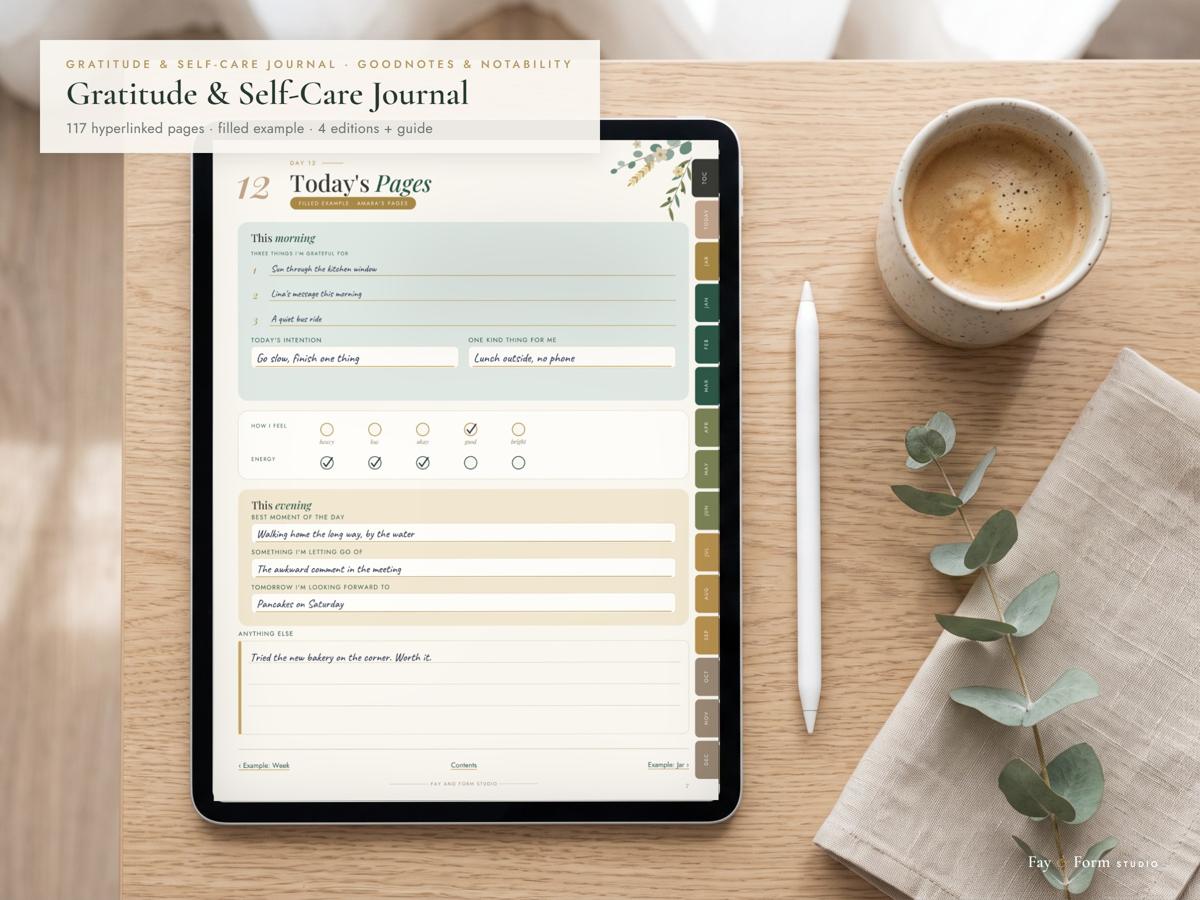
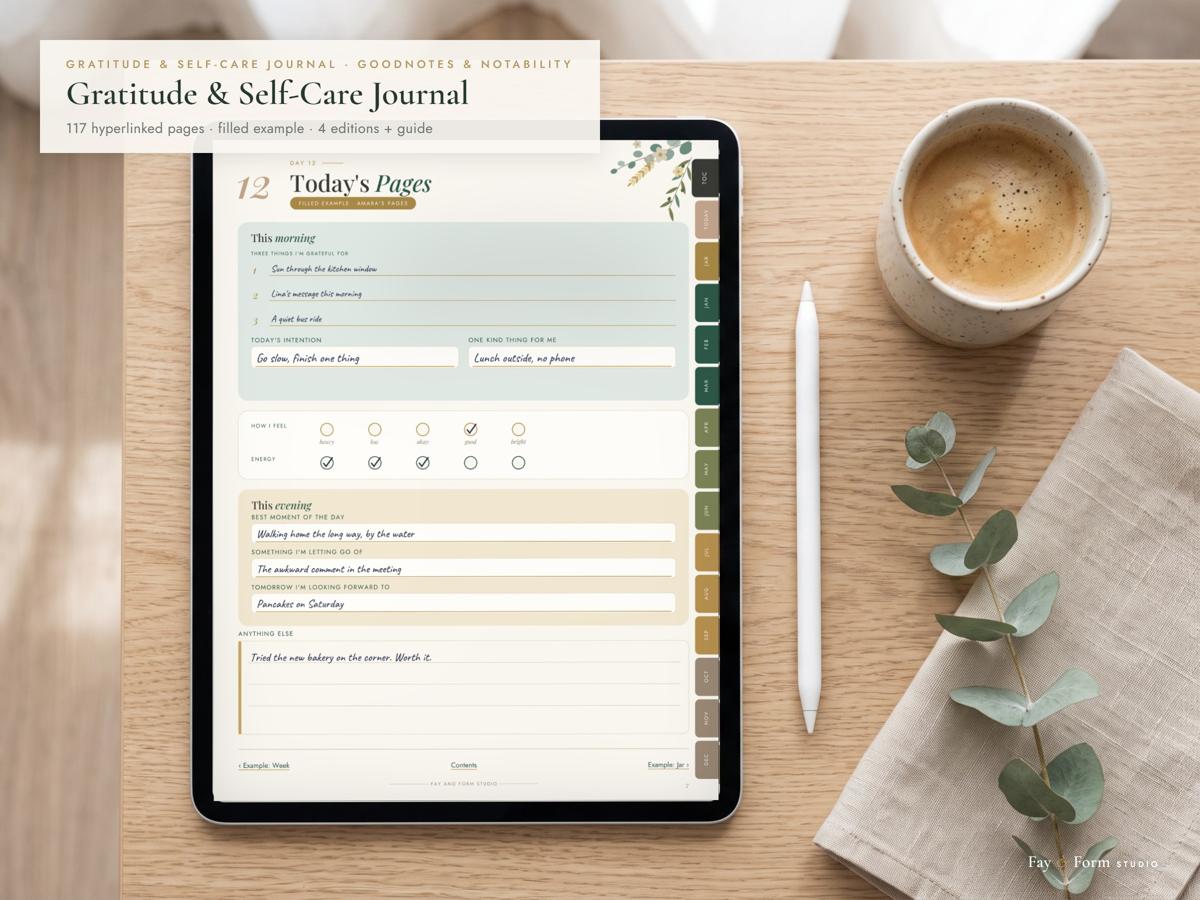
Our Digital Journal is a comprehensive option for A$14.90. It's designed to help you notice the good and look after yourself, a few quiet minutes at a time. It features morning and evening prompts that take about five minutes, a weekly reset, and a self-care menu for challenging days. You can skip days freely without feeling like you need to catch up.
This digital planner includes 117 pages and over 2,200 links for easy navigation. Inside, you'll find a filled example (Amara's pages, 10 samples) to guide you, a 'My Self-Care Menu' covering body, mind, heart, space, and joy, plus 'What Fills My Cup' with gentle boundaries. There are 31 daily pages for three gratitudes, an intention, one kind thing for yourself, a mood and energy check, and an evening reflection. It also includes 52 Weekly Resets (highs, lows, self-care grid, rest level, next week's kindness), 12 month pages (word for the month, four habits, moments to remember), a Good Things Jar (50 lines), Control Sorter, Kind Words, Letter to Future Me, and a Year of Good Things.
Each download provides five files: a US Letter fillable PDF (type or handwrite), a Handwriting PDF (no text boxes), an A4 PDF (for Australia, UK, Europe), a Phone layout, and a 'Start Here' guide. It's a standard, hyperlinked PDF that works in your chosen app.
This digital file is ideal for Australians who are comfortable with tablets and enjoy the flexibility of digital tools. It's a practical way to maintain your gratitude practice without needing physical space.
Gratitude Journal App Options
For convenience, a dedicated gratitude journal app can keep your practice literally in your pocket. These apps are designed for quick entries on your smartphone or tablet, often with reminders and tracking features. Using an app makes it easy to capture moments of appreciation wherever you are.
Considerations for Apps:
- Ease of use: How quickly can you make an entry?
- Features: Do you need reminders, mood tracking, or photo uploads?
- Subscription model: Many apps operate on a subscription basis.
- Privacy: Understand how your data is stored.
While many general journaling apps exist, some are specifically for gratitude. Fay & Form Studio offers a household planner app, which includes free access to one planner for one person, with no card needed. Sharing with family starts with Tier 1 at A$29 a year. Currently, our ready-made app planners include a Ramadan kids planner, a home garden planner, and a dog care planner, each with a free demo. While these are not specific journals for this practice, they demonstrate the functionality of our app platform for managing different aspects of life.
This app is ideal if you're always on the go and prefer to interact with your journal through your phone or tablet. They make it very easy to capture moments of gratitude as they happen.
A Simple Five-Minute Daily Practice Format
No matter which type of journal for this practice you choose, the format for a daily practice can be simple and effective. You don't need to spend a lot of time. Five minutes is often all it takes to make a real difference.
Here’s a practical format you can use:
- Morning (2-3 minutes):
- List three things you are grateful for right now. These can be big or small – your morning coffee, a sunny day, a good night's sleep.
- Set an intention for the day. What kind of day do you want to have?
- Consider one kind thing you can do for yourself today.
- Quickly check in with your mood and energy levels.
- Evening (2-3 minutes):
- Reflect on your day. What went well?
- List one or two more things you were grateful for that happened during the day.
- Acknowledge any challenges and how you navigated them.
This structure helps you start your day with a positive mindset and end it with reflection. Remember, consistency is more important than perfection. If you miss a day, just pick up where you left off. There's nothing to catch up on.
For more ideas on what to write, you might find our article on gratitude journal prompts helpful. It can spark ideas when you're not sure what to write about.
Comparing Your Journal Options in Australia
To help you decide, here's a quick comparison of the main types of journals available to Australians:
| Feature | Printed Journal | Printable Template | Digital Journal (e.g., PDF for GoodNotes) | Gratitude Journal App |
|---|---|---|---|---|
| Cost Range | Varies | One-off purchase | One-off purchase | Free or subscription |
| Format | Physical book | Printable PDF file | Interactive PDF file | Software application |
| Writing Method | Pen and paper | Pen and paper | Stylus on tablet, or typing | Typing on phone/tablet |
| Portability | Can be bulky | As light as paper, or in a binder | On device, highly portable | On device, highly portable |
| Customisation | Very limited | Print what you need, use different binders | Add photos, move pages, easy erase | Varies by app, often limited |
| Sustainability | Uses paper, ink | Uses paper, ink (less with good design) | Paperless, no ink | Paperless, no ink |
| Example Product | Shop-bought journal | Fay & Form Printable Journal (A$9.90) | Fay & Form Digital Journal (A$14.90) | Fay & Form household app (A$29/year for family sharing) |
Consider your daily habits and what feels most natural to you. There's no single "best" option; it's about finding what encourages your consistent practice.
Frequently Asked Questions
Where can I buy a journal for this practice in Australia?
You can find printed journals in bookstores, stationery shops, and department stores across Australia. For digital options, you can purchase printable templates or digital planners from online stores, like Fay & Form Studio, which offer immediate downloads.
Is a digital gratitude journal as good as paper?
Yes, a digital gratitude journal can be just as effective as a paper one, and for many, it's even better. It offers portability, eco-friendliness, and flexibility like adding photos or easily correcting mistakes. The key is finding a format that encourages consistent use for you personally.
How long should a gratitude entry be?
A gratitude entry doesn't need to be long at all. Even a few bullet points or short sentences describing three things you're grateful for can be highly effective. The goal is to cultivate a habit of noticing and appreciating, not to write a lengthy essay. Five minutes a day is often enough.
Choosing the right journal for your practice in Australia is a personal decision. Whether you prefer the tangible feel of paper, the flexibility of a printable template, the interactive nature of a digital journal, or the convenience of an app, the most important thing is to start. A consistent five-minute daily practice can significantly enhance your wellbeing and help you cultivate a more positive outlook.
We believe that a well-designed journal should support your practice without adding stress. Take a moment to consider what fits your lifestyle and commit to taking those few quiet minutes for yourself each day.
To explore a comprehensive digital option, See the Gratitude Journal Digital.